TIMO is a human-centred data platform that connects drivers and communities across the dynamic network of EV charge points in the UK.

TIMO: Human-centred data platform for new EV charging experience
The challenge
TIMO was created in partnership with PA Consulting, the UK’s pre-eminent technology and innovation consultant with a strong heritage of design excellence. Following the HM Department for Transport’s launch of the iconic new British charge point for electric vehicles designed by RCA and PA Consulting, we worked closely with their team. We carried out three months of design research to discover new insights that ultimately supported PA Consulting in its mission to empower zero-carbon transition within the UK by 2030.

My role
Made research plan and strategy; Conduct interview and workshop; Developed design strategy and principle; Ideation; Made service blueprint, service system and business model; Wrote video and presentation content; project management
Team: Alexander Burdett, Jiayi Wang, Shi-tong Chen, Yanting Shen, Vicky Wang
Project quick view
Problem Statement
Most community services currently assume what over 65s want and treat them all the same way, neglecting their differing personalities, and desire for independence, engagement and fun. Over 65s cannot find the proper support to engage in local communities in a way which they like. This leads to bad mental health, low quality of life, social exclusion and unhealthy ageing.
HMW
How might we make charging time spent more valuable for current and future EV drivers SO THAT people can create meaningful time into their daily routines THROUGH building new experiences that enable living, sharing and mobility in the city?
Service value proposition
TIMO, a human-centred data platform, connects drivers and communities across a dynamic network of 25,000 local UK chargers. We are shaping a smooth transition to EV and a zero-carbon future worldwide.
Design Story
Research
The Road to Zero Carbon
The UK is moving to a ban on sales of petrol and diesel cars in 2030. Facing this transition to a zero-carbon future, the new generation of electric vehicles (EVs) must meet the challenge of how to design and better adapt energy transfer to electric cars for the 8m-plus households that do not have access to a driveway in which to install their own device.
Royal College of Art and PA Consulting, for HM Department for Transport, designed an iconic charge point to launch new state-of-the-art charging infrastructure for the UK.
With a new charge point, how can TIMO design a new vision for charging to help the current and next generation of EV users to step confidently into the zero-carbon era?
3 initial principles for this project
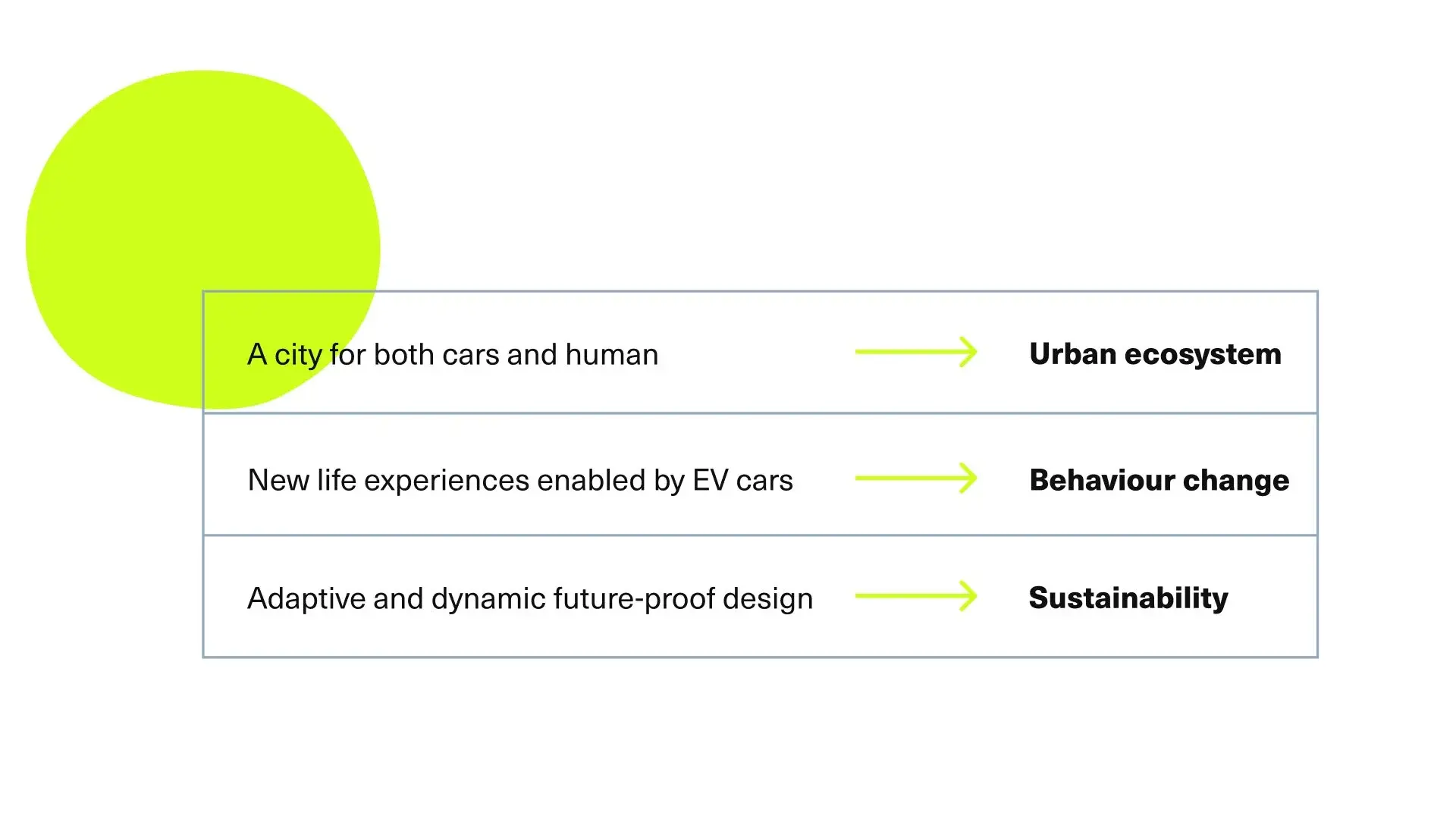
Our design team framed the service design with three initial strategic design principles for urban living:
- Make the service inclusive for non-drivers in the city
- Integrate the charging service into the ecosystem of the city
- Don’t promote the use of more cars
Insights
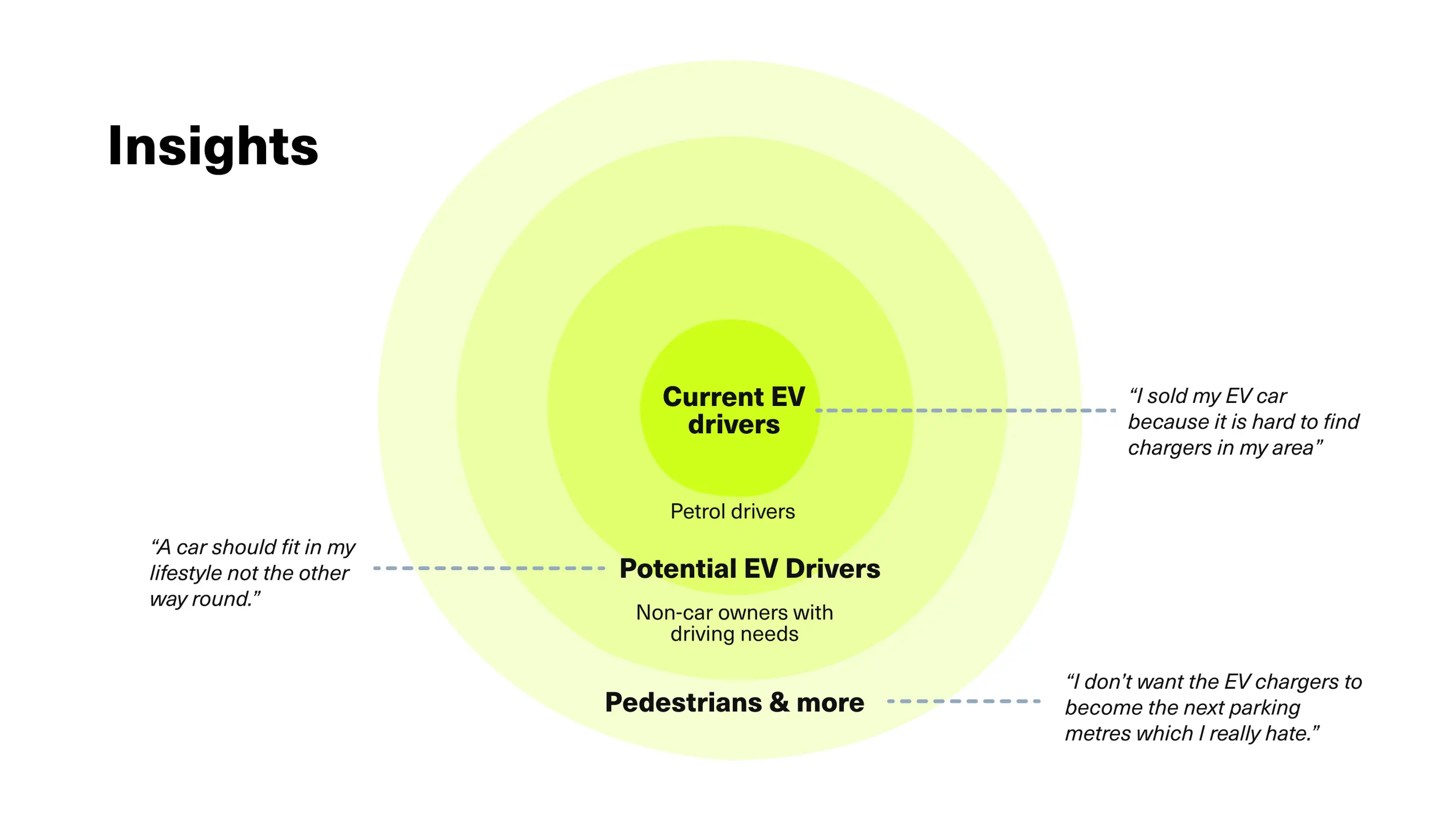
We conducted initial street interviews with 39 people from diverse backgrounds across different environments – from shopping centres, parks and street charging points, to see what they were thinking about EV chargers. We then did 1-on-1 interviews with 10 current and potential drivers to understand their daily routines – the why, when, where and how they drive, and the role of driving in their way of life. Lastly, we also interviewed three design experts about urban ecosystems and design.
Time is the biggest barrier to new EV adoption
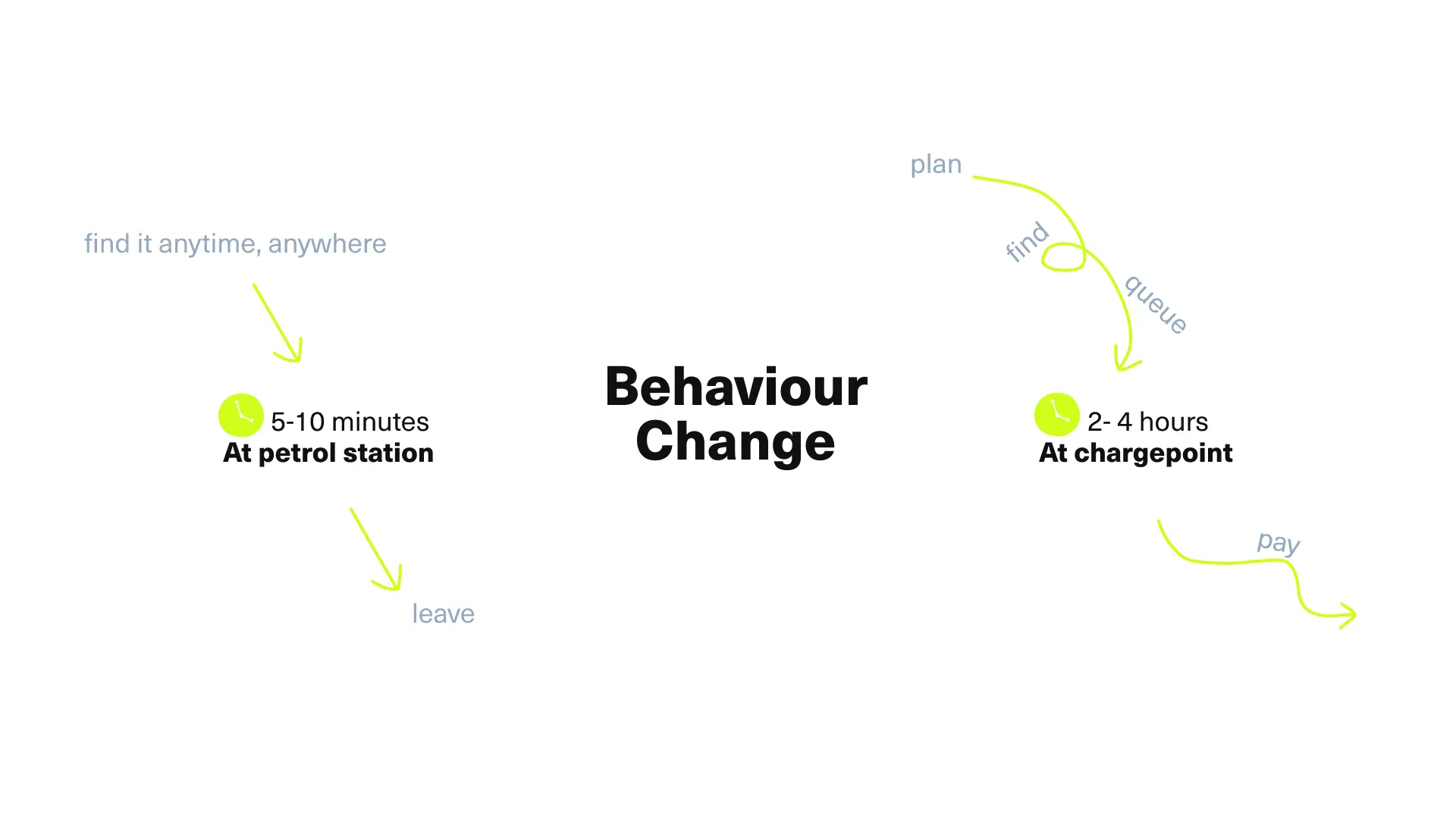
For current petrol and non-EV drivers, concerns about charging time stop most of them from switching to electric vehicles, particularly when compared with petrol or diesel refuelling. On top of an average 2-4 hours charging time, EV drivers currently need to plan and find a functioning charge point first and then wait in a queue if it is occupied. This process feels significantly harder to cope with than a good-old petrol refuelling experience.
Waiting time is annoying; charging time is not
Is time really the problem for EV users, as non-EV drivers suspect? Surprisingly, we found out that they considered charging time as a chance for 'me time' and generally enjoyed it. The real issue for them being that it was hard to find a reliable charger. Problems related to a charge point being 'ICEd' or 'ICEing', charging bays being occupied by non-EV cars, were frequently mentioned. This results in more time in their day wasted as the drivers need to wait or find another charging spot with no promise of success.
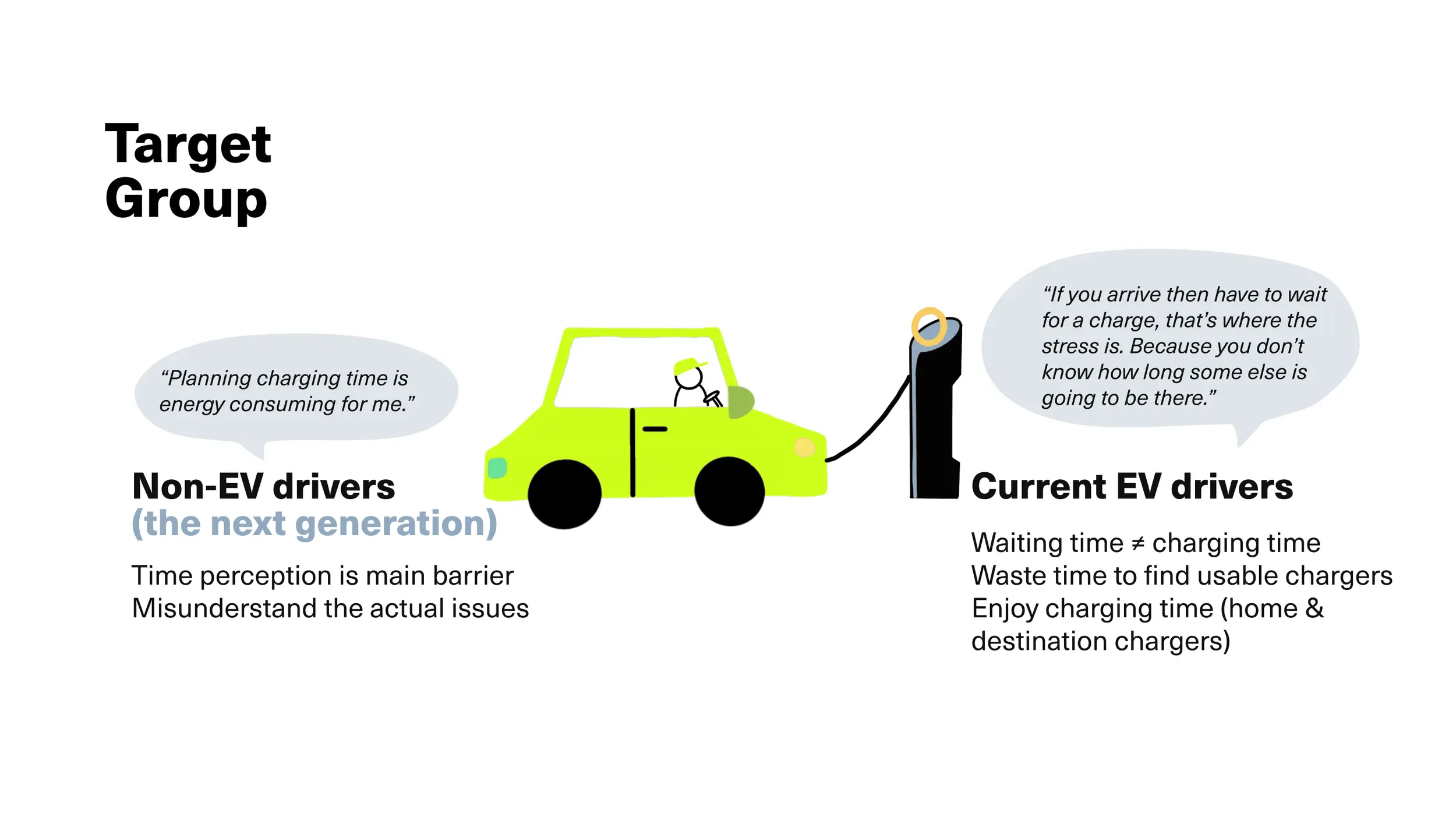
Non-Drivers have negative assumptions about Electric Vehicles & chargepoints
In cities like London, most people don't drive to work or drive often at all. In our research, we discovered how non-drivers do not really care about cars, and some even have negative assumptions about EVs and charge point infrastructure. A potential reason why misconceptions occur between drivers and non-drivers became clear from the separation between the two groups: there are no ways for pedestrians to interact with the EV driver community or the charge points themselves. So it results in a lack of awareness and a lot of misunderstanding.
HMW
make charging time spent more valuable for current and future EV drivers SO THAT people can create meaningful time into their daily routines THROUGH building new experiences that enable living, sharing and mobility in the city?
Design Proposition
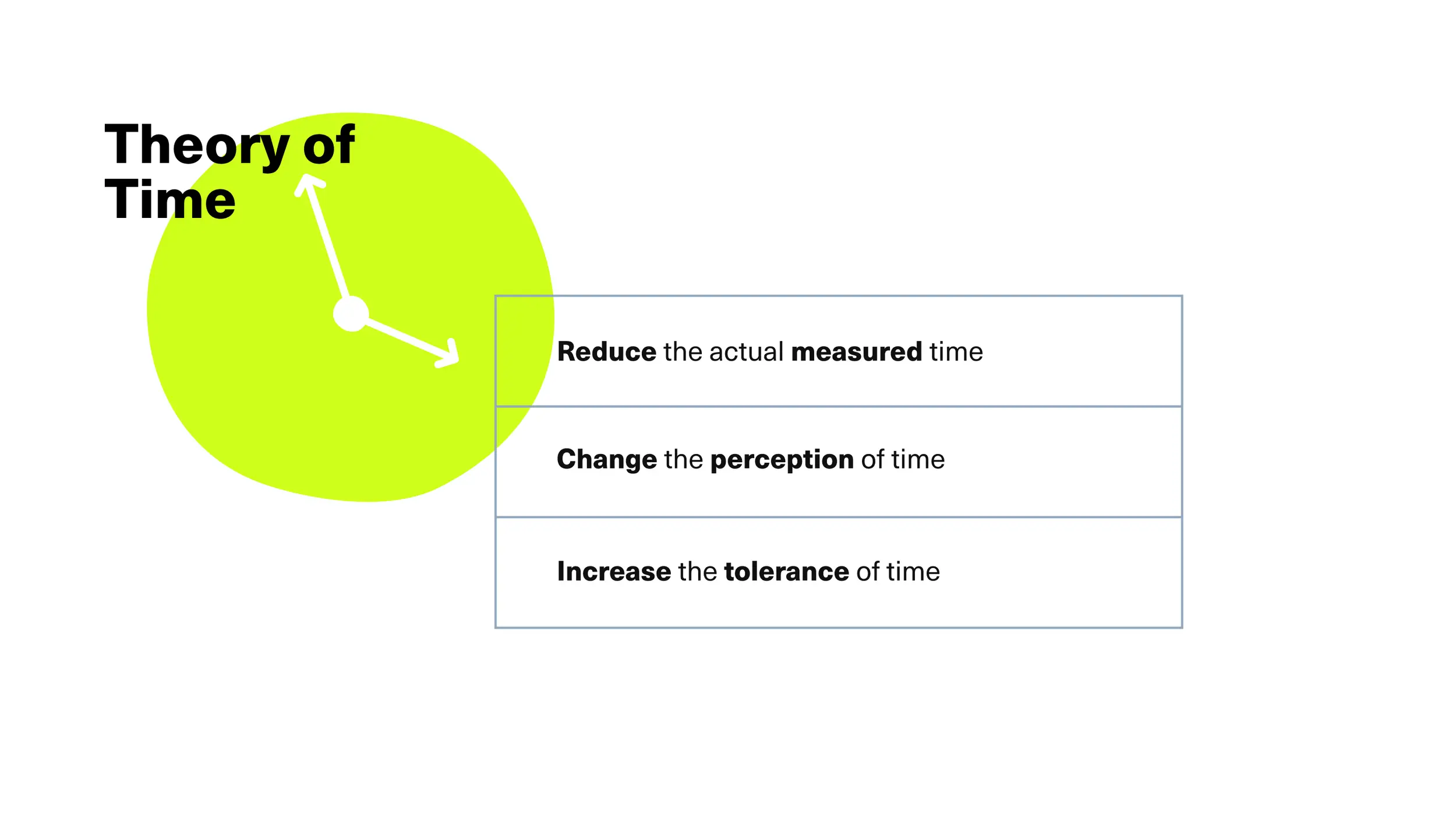
How can we redesign current and future EV drivers' experience of time to adapt to different mobility behaviours that make up lives in the city? We used three methodologies to modify the ‘time’ experience design.
Based on this, we generated our design directions:
- To design a more efficient and seamless integrated service to reduce the actual time of charging, including the duration of finding the charger, charging the car and paying for the service
- To change the time perception of the potential and new EV drivers, through 'occupying' otherwise 'unoccupied' time with experiences
- Make the charging service more adaptive to the user's data and needs overtime, so that the drivers can have a sense of safety and trust
Stakeholder value
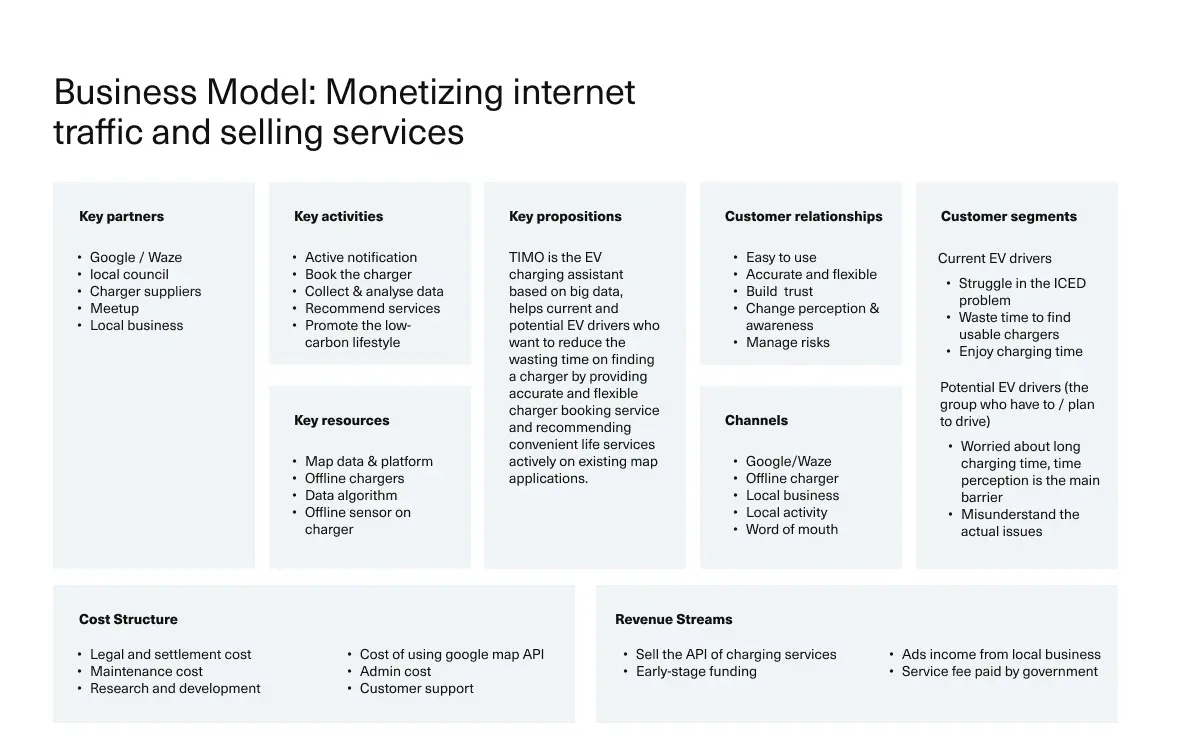
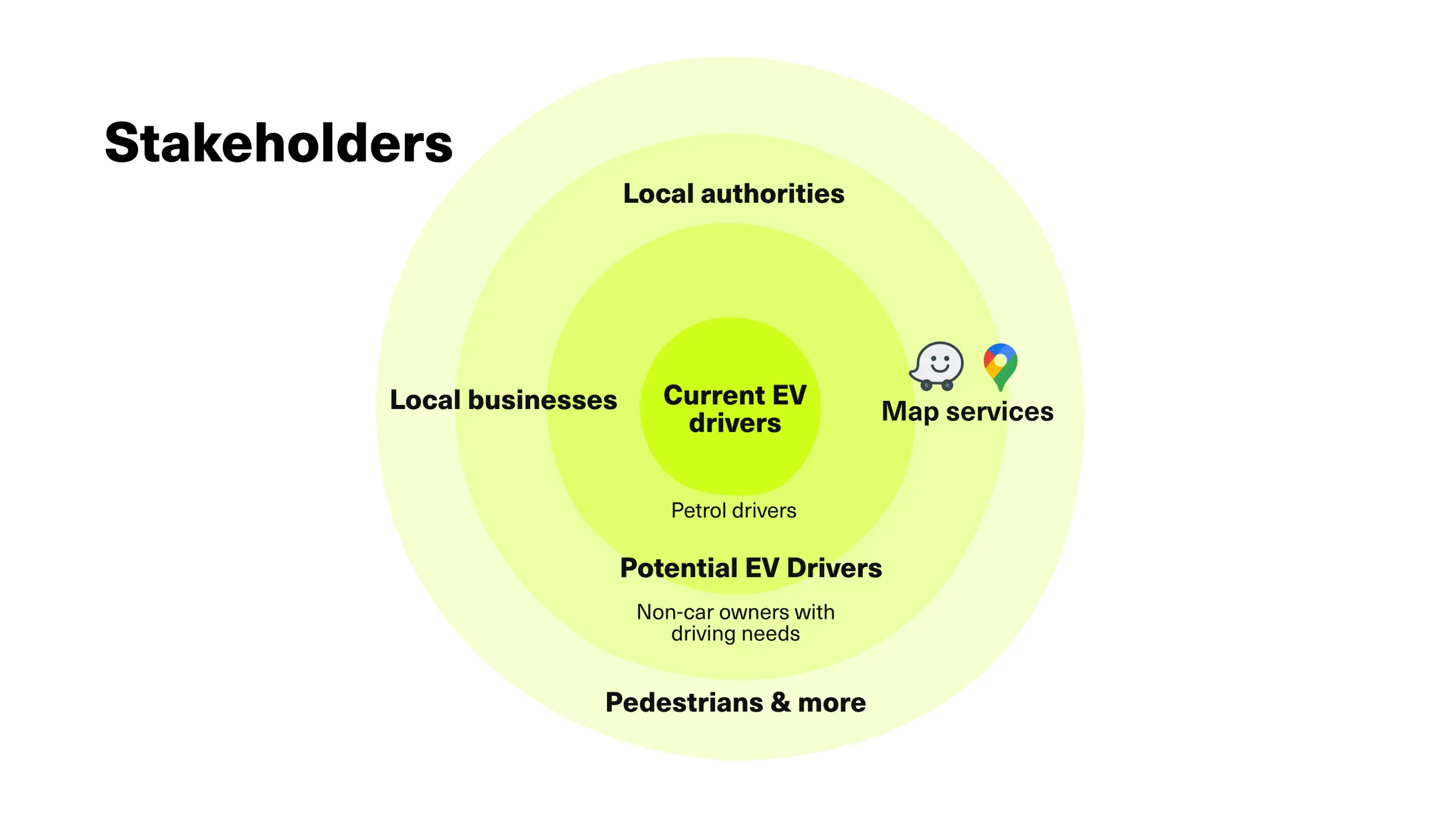
Echoing the design principles, our goal is not only to improve the charging experience but to empower a smooth transition to sustainability for all. Besides our main target group – current and potential EV drivers, we include pedestrians in the ecosystem. Key stakeholders include local businesses, local authorities and mapping service providers.
Design Strategy
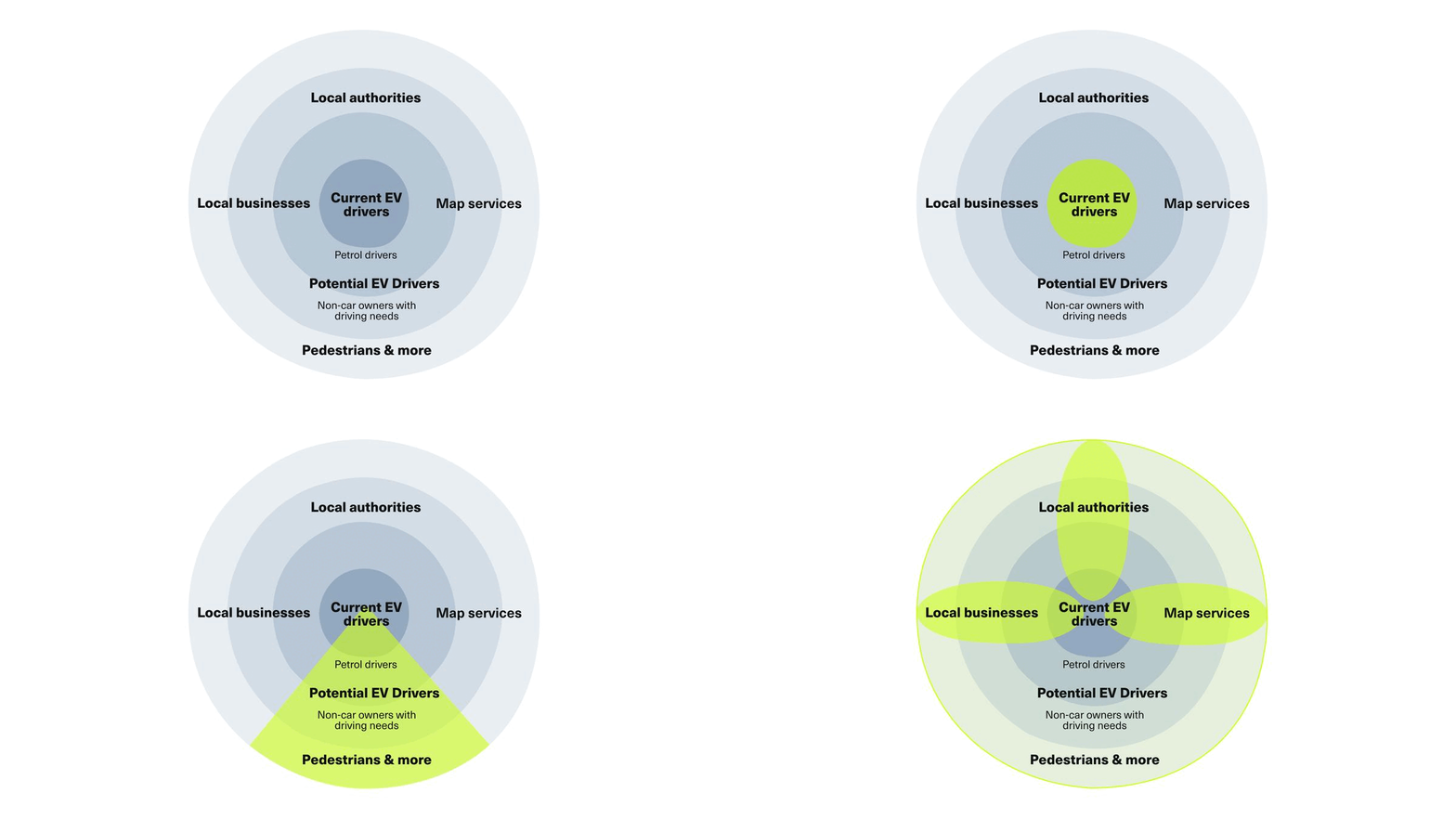
Developing our time design framework and exploring the opportunities created by insights from research, we updated our three design strategies as follows:
- Improve the experience of the core group (current EV drivers)
- Foster engagement with non-EV drivers
- Shape a dynamic and adaptive system with all
Ideation & Prototype
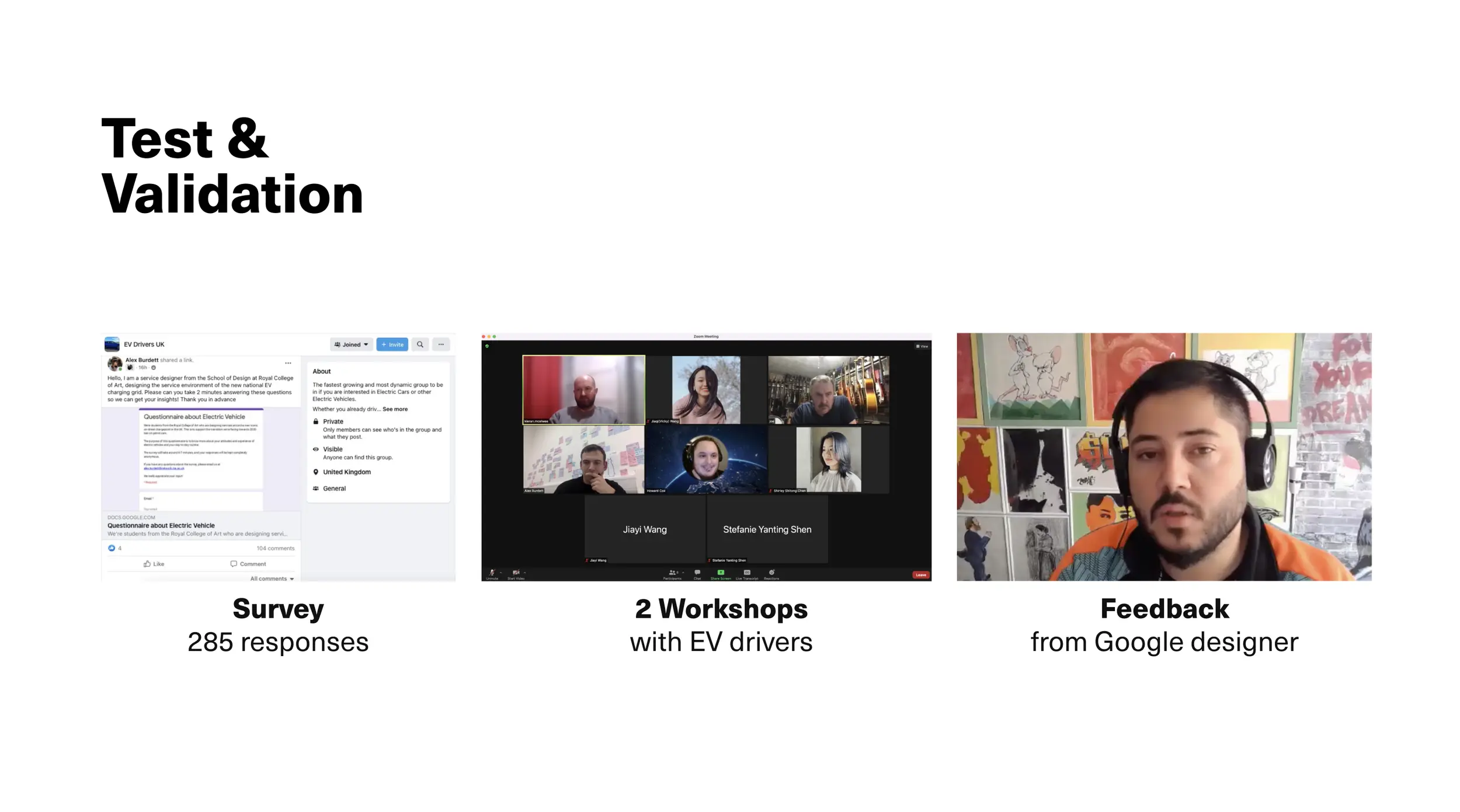
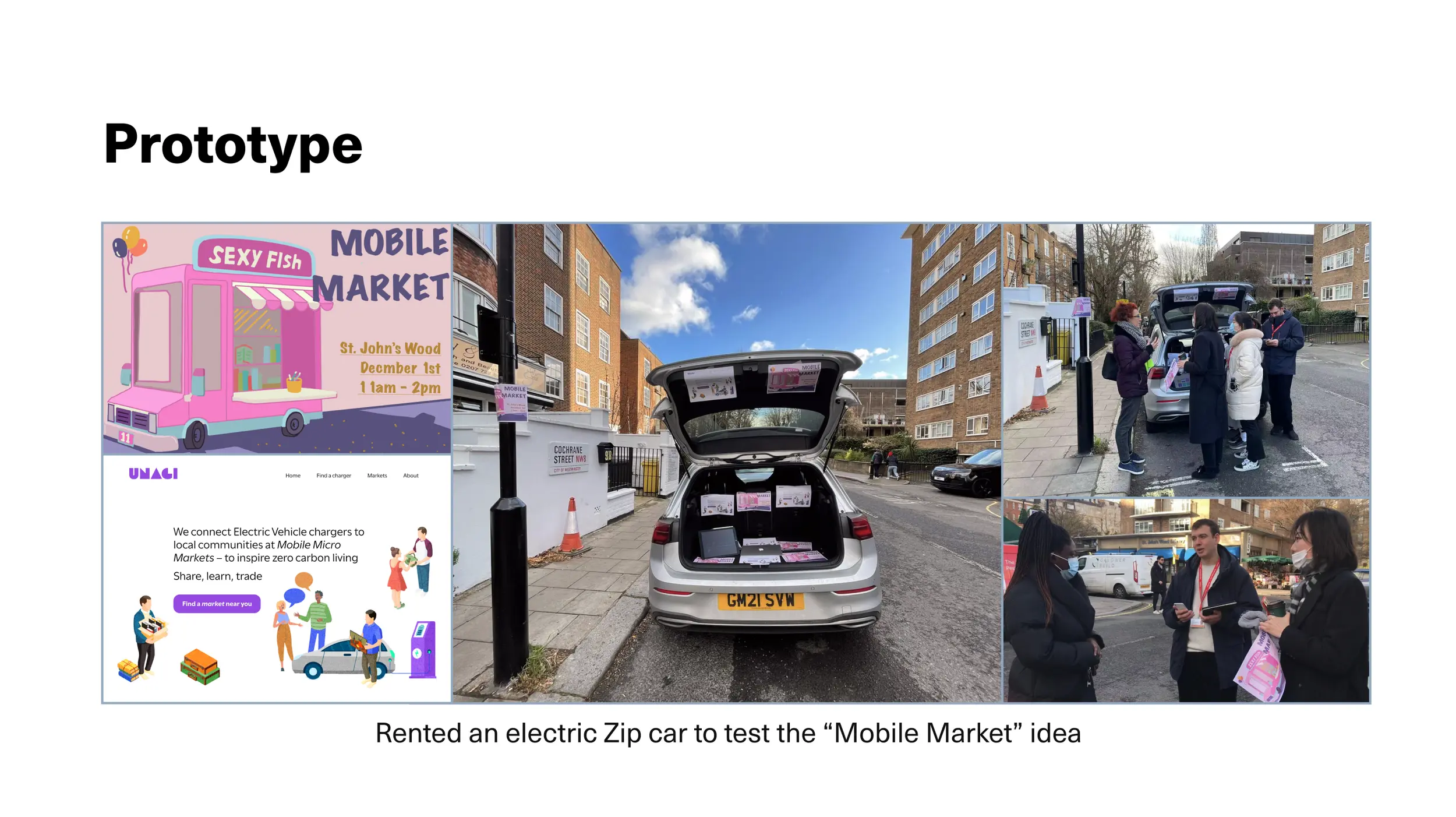
The strategy we defined helped us to ideate with clear and thoughtful direction. To test our ideas, we held two workshops with EV drivers and collected 285 responses from a survey of EV drivers. We also rented a hybrid Zip car to prototype one of our ideas in real life with members of the public, where we envisioned EV cars by the charge points as mobile micro-markets to empower sharing, learning and trading. However, the feedback we received showed safety and privacy hazards so we killed the idea. We integrated the positive feedback and merged them into our final design, TIMO.
Service experience
TIMO: shaping a smooth transition to EV and a zero-carbon future for all
TIMO is a human-centred data platform that connects drivers and communities across the dynamic network of EV charge points in the UK.
Key features
The online+offline services for smooth charging
Starting with our core users, we solve the essential painpoints and empower them to spend time in a more meaningful way. We believe users will act as ambassadors for new EV lifestyles and help boost others' confidence towards the EV transition. For urban residents, more community engagement with EV drivers and charging will reduce people's misunderstandings about EV, then shape the zero-carbon community in the long run.
For the whole society, we provide a dynamic data platform for better mobility, and increase the harmony between cars and people, and design cities to adapt to a zero-carbon future.
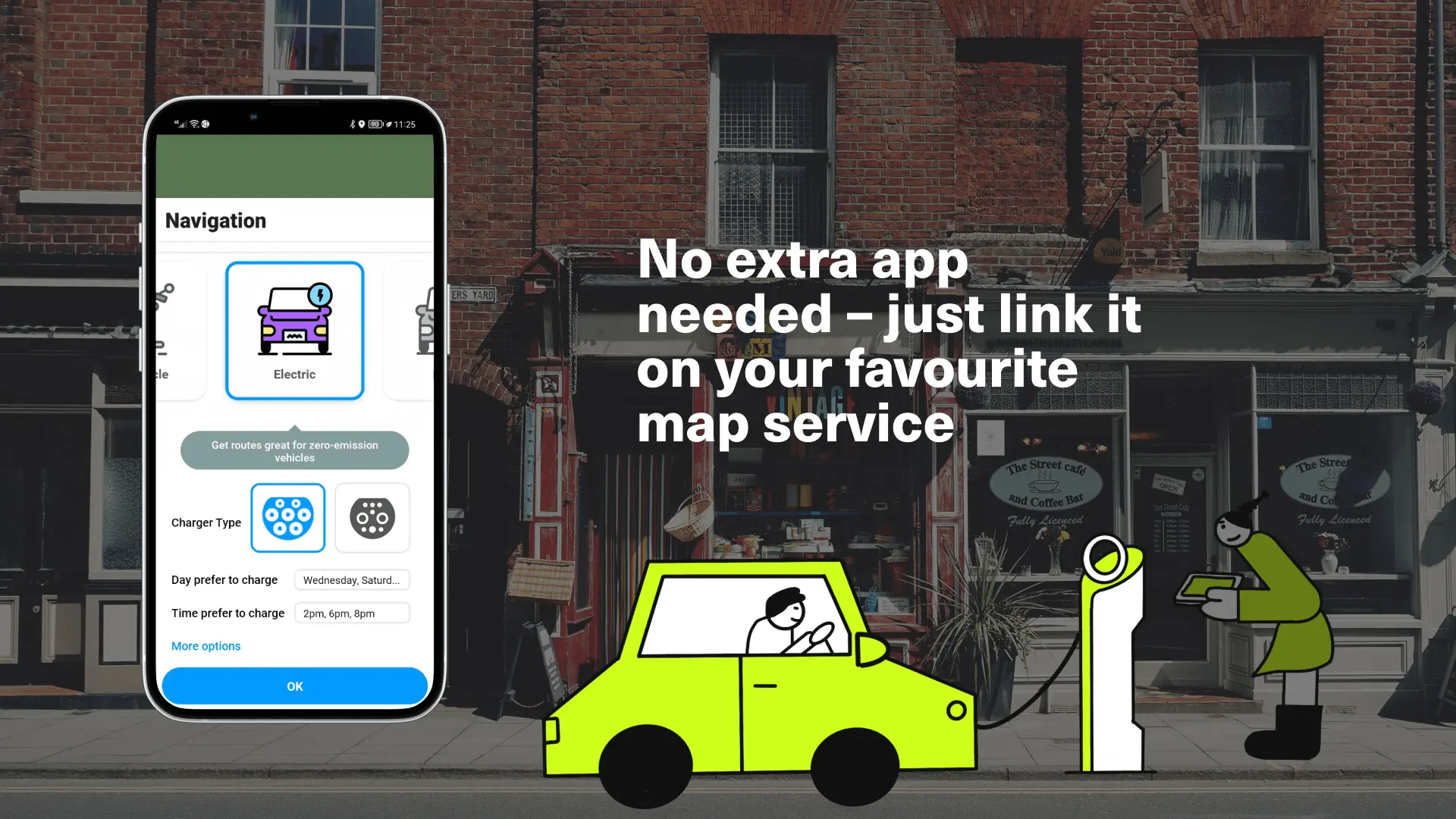
No extra app needed
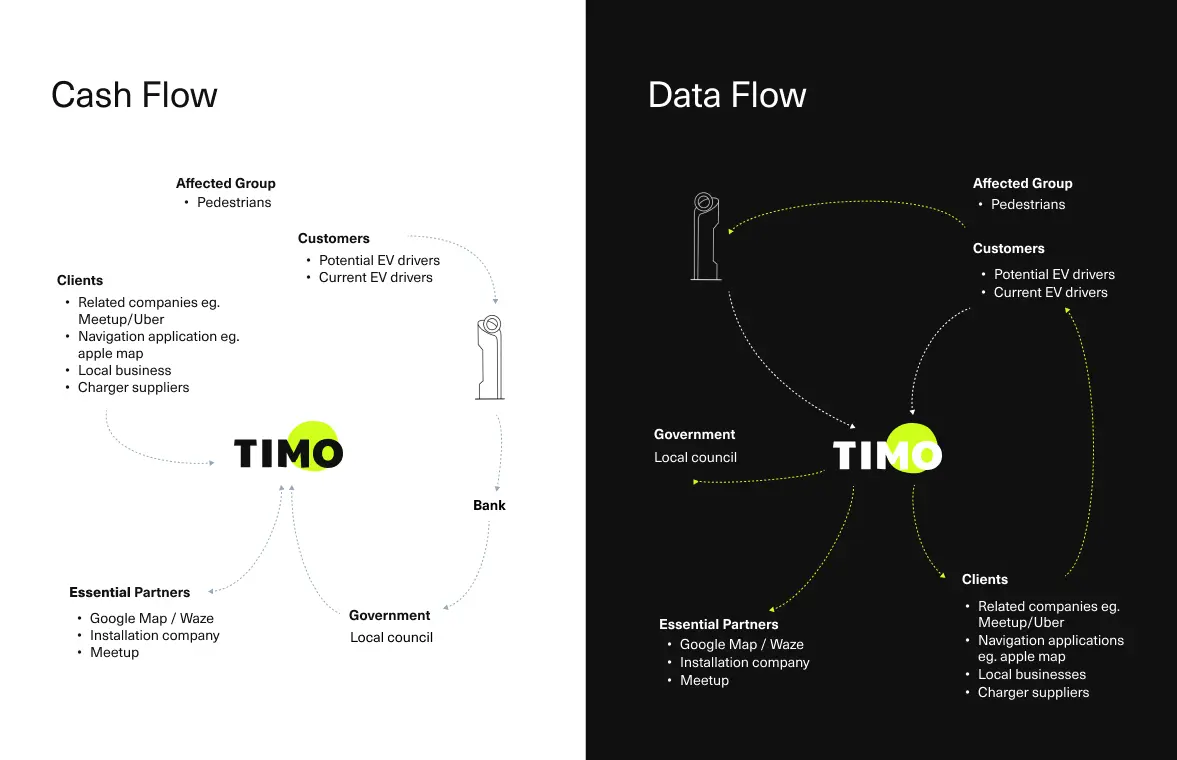
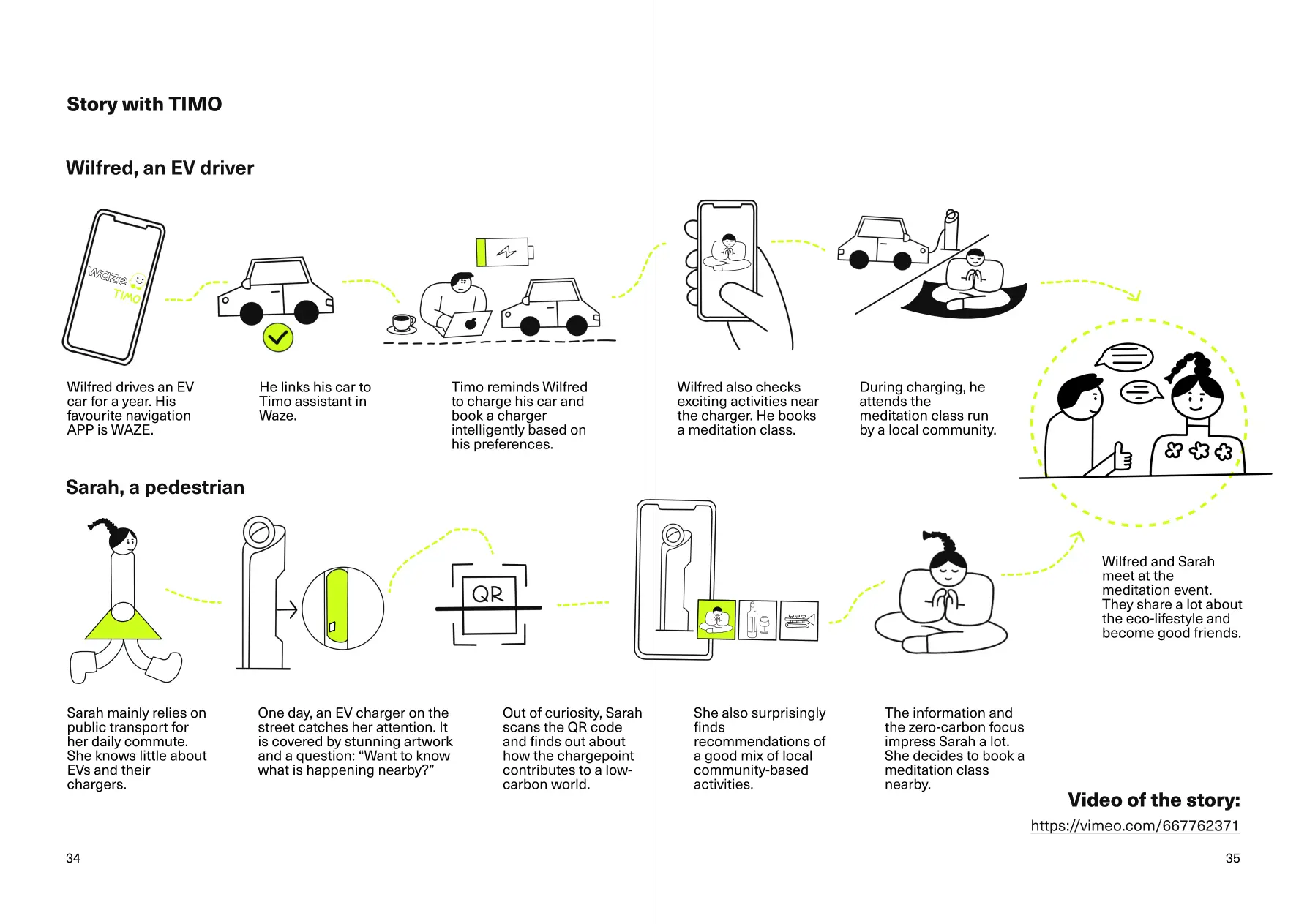
TIMO is designed as an integration to existing map apps such as Google and Waze so we can integrate across all competing services as one source of truth.
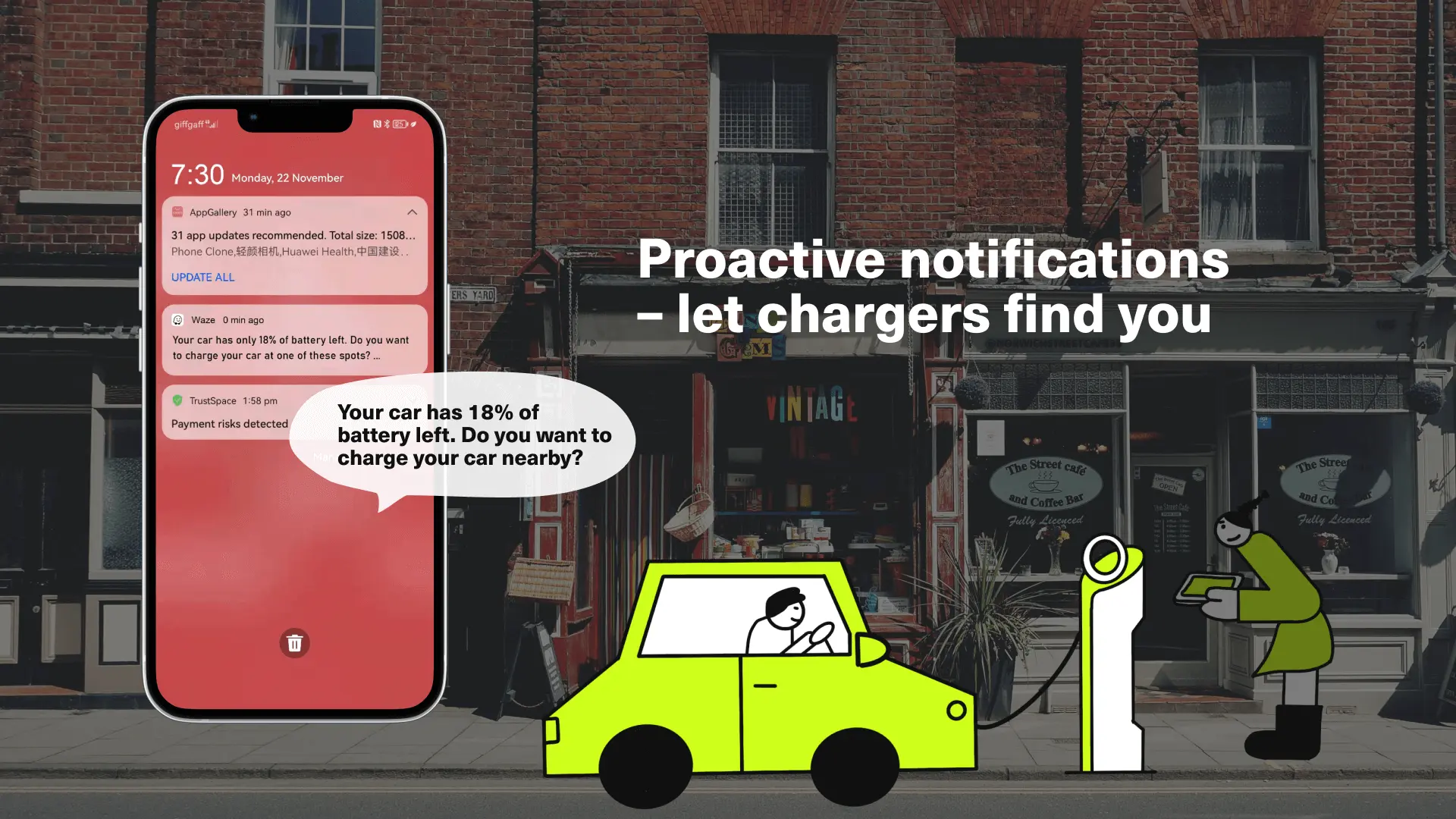
Proactive notifications let chargers find the EVs
TIMO inverted the logic of a regular charge point service. Instead of waiting for drivers to find chargers, it allows chargers to find drivers proactively according to their estimated battery status. This eliminates the mental stress of planning for a charge from the user journey.
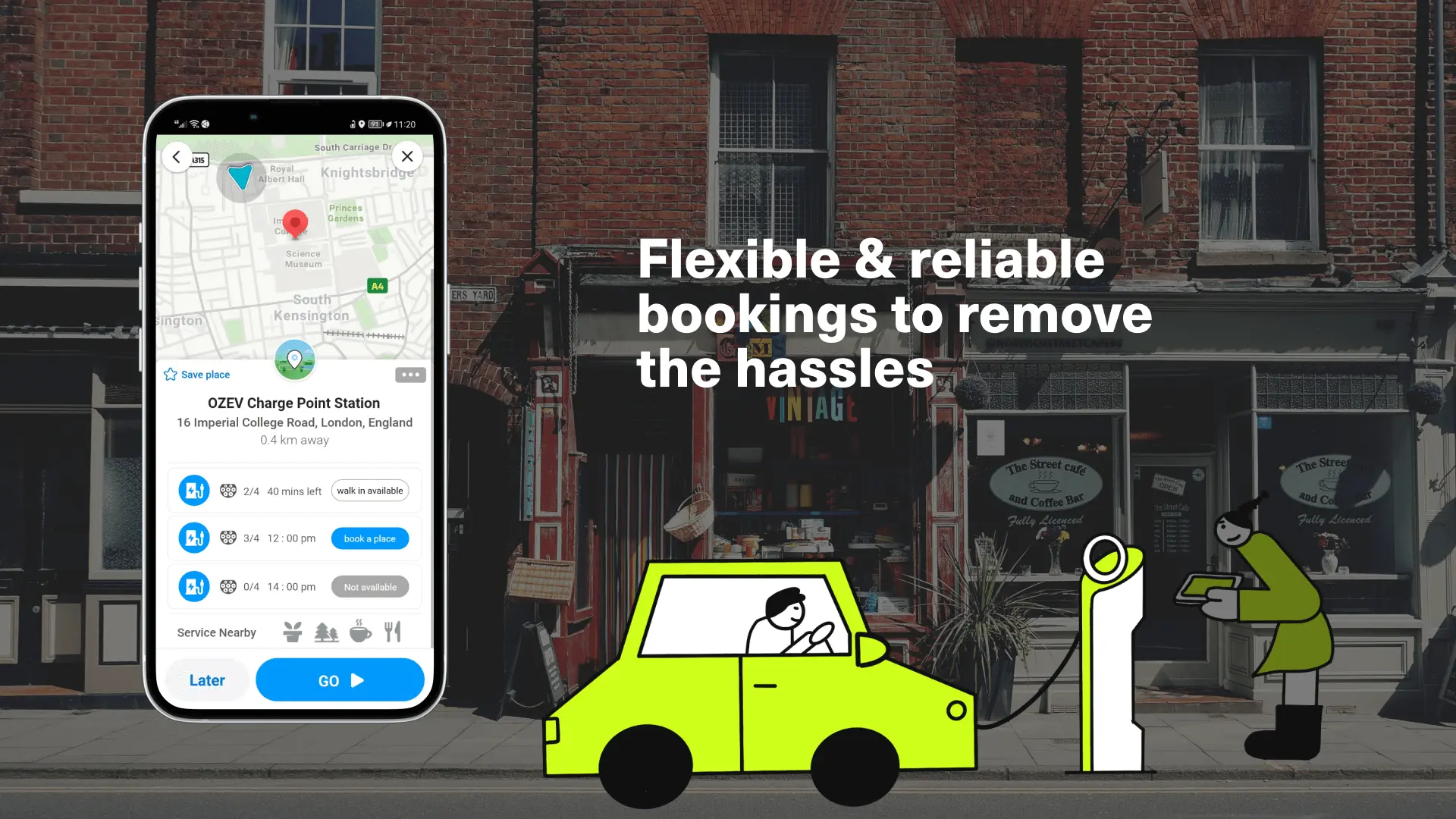
Reliable and flexible bookings
TIMO can intelligently recommend, book and plan charge points to meet drivers’ requirements. For example, the driver can plan a route with an available charge point or find one with desired amenities nearby, all with a few simple clicks on the map app. Information about time planning will be clearly indicated.
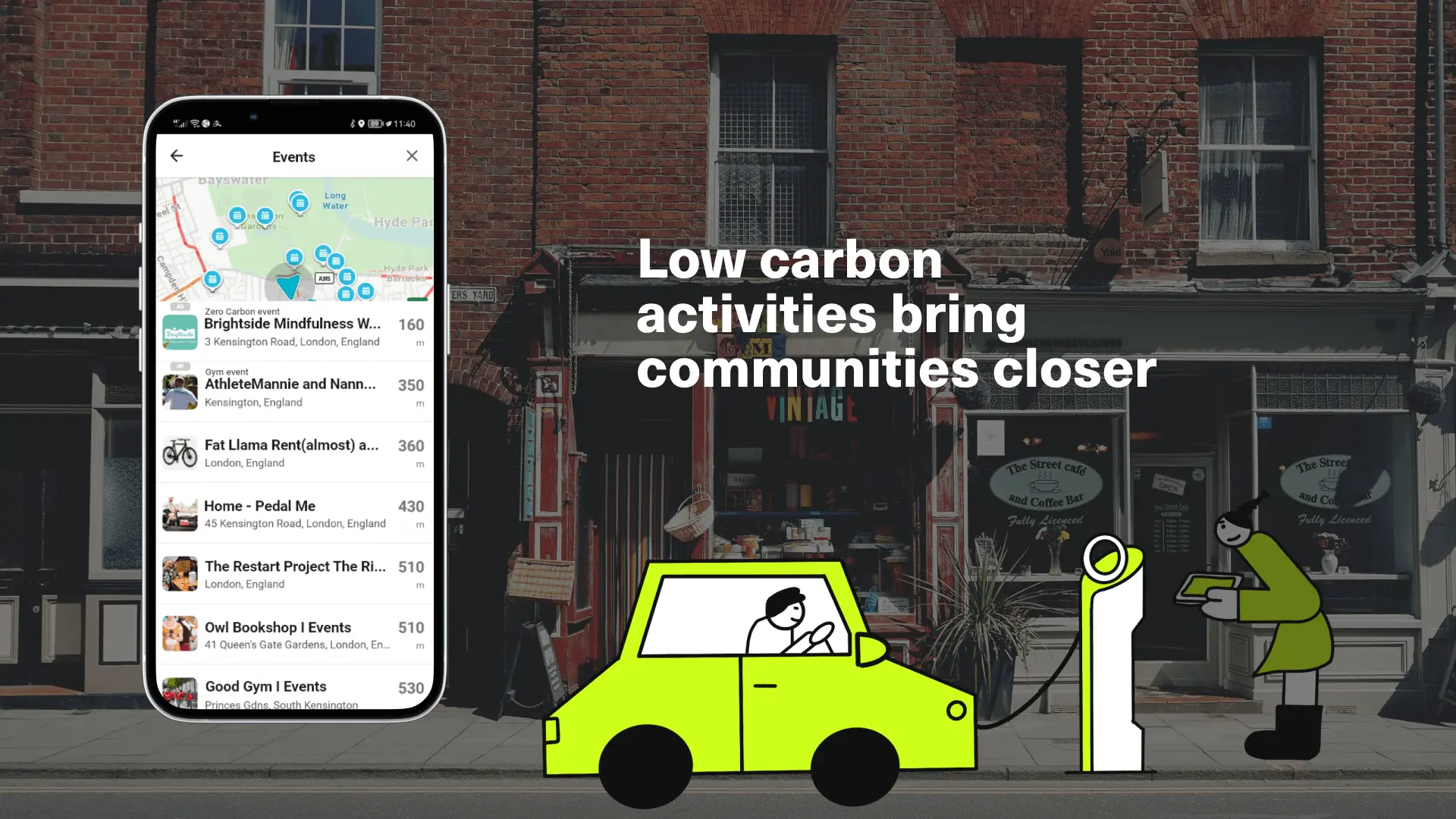
Low carbon activities bring communities closer
As our mission is to embrace the transition to a zero-carbon lifestyle with everyone, we integrate recommendations of community-based activities into Timo. The event information will be obtained from platforms like Meetup or Eventbrite, with a filter that pushes eco-friendly ones forward.
Chargepoint as a beacon for local stories
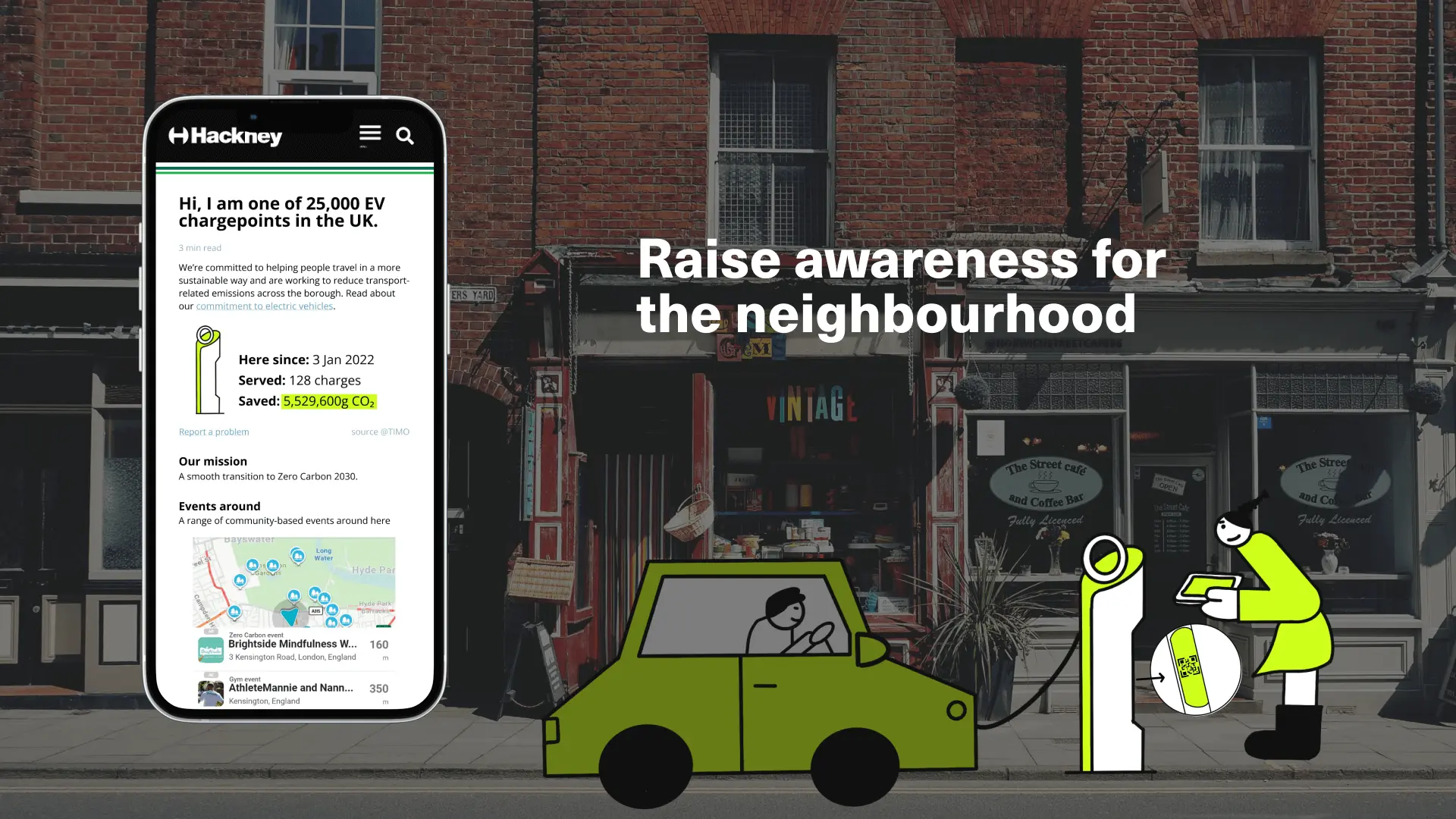
Non-EV drivers have the opportunity to interact with the charge point. The side of the charge point facing the pavement is designed with a flat surface to embed a poster with a QR code. The QR code directs them to a webpage hosted by the local council, with information about the charge point: what this is, how it is used, why we need it here. Some simple data visualisations, such as how many cars it has served, help to communicate to non-drivers the positive impact it has on the zero-carbon movement.
Human-centred data enables convenient and sustainable lifestyle patterns
Data gathered helps people choose what works best for themselves as part of meaningful behavioural design. People need help finding chargers, so we use the GPS on users phones. Users choose the destination; users choose their preferences. TIMO shapes the choice architecture to create pathways to sustainable zero-carbon communities.
Business model and implementation