
Brightside is a unique service designed to provide antenatal programmes centred around mental wellness for mothers-to-be using nature as an intervention.
Brightside: Antenatal programme with nature-based social prescription
The challenge
Brightside is part of the UK Research & Innovation (UKRI) funded project “Nature's Way”, with a brief branched off from an academic research study on citizen wellbeing, social prescribing, citizen access to green-blue spaces (or lack thereof) and how nature-based interventions can be better designed to meet the needs of people living in highly urbanised environments.

My role
Design research: interview, workshop design and facilitation; Project ideation and concept development; Business model and strategy, Financial statement, presentation outline
Team: Serene, Debby, Nini, Vicky, Yanting & Anthony
Project quick view
Problem Statement
Perinatal mental health (PMH) problems affect 1 in 5 mums in UK. The mothers described pregnancy as challenging and lonely because of the expectation that pregnant women always look radiant, and be appreciative of their ability to create life. In the long run, perinatal mental health issues can have significant and long-lasting effects on the wider family and society.
HMW
How might we use nature as an effective public health intervention tool and as a key asset for mental health and wellbeing activities to increase mums-to-be’s mental resilience and preparedness for the challenges of motherhood?
Service value proposition
Brightside is a unique service designed to provide antenatal programmes centred around mental wellness for mothers-to-be using nature as an intervention.
Design Story
Research
Citizen wellbeing during the COVID-19
Along with the obvious physical implications for people who contract Covid-19, the pandemic has had a devastating mental health impact on people all over the world. In a survey done in 2020, more than 4 in 10 adults (44%) said their well-being was affected by the pandemic, and this issue is likely to continue as the country and community recovers from the pandemic.
Opportunity: Nature and green social prescribing
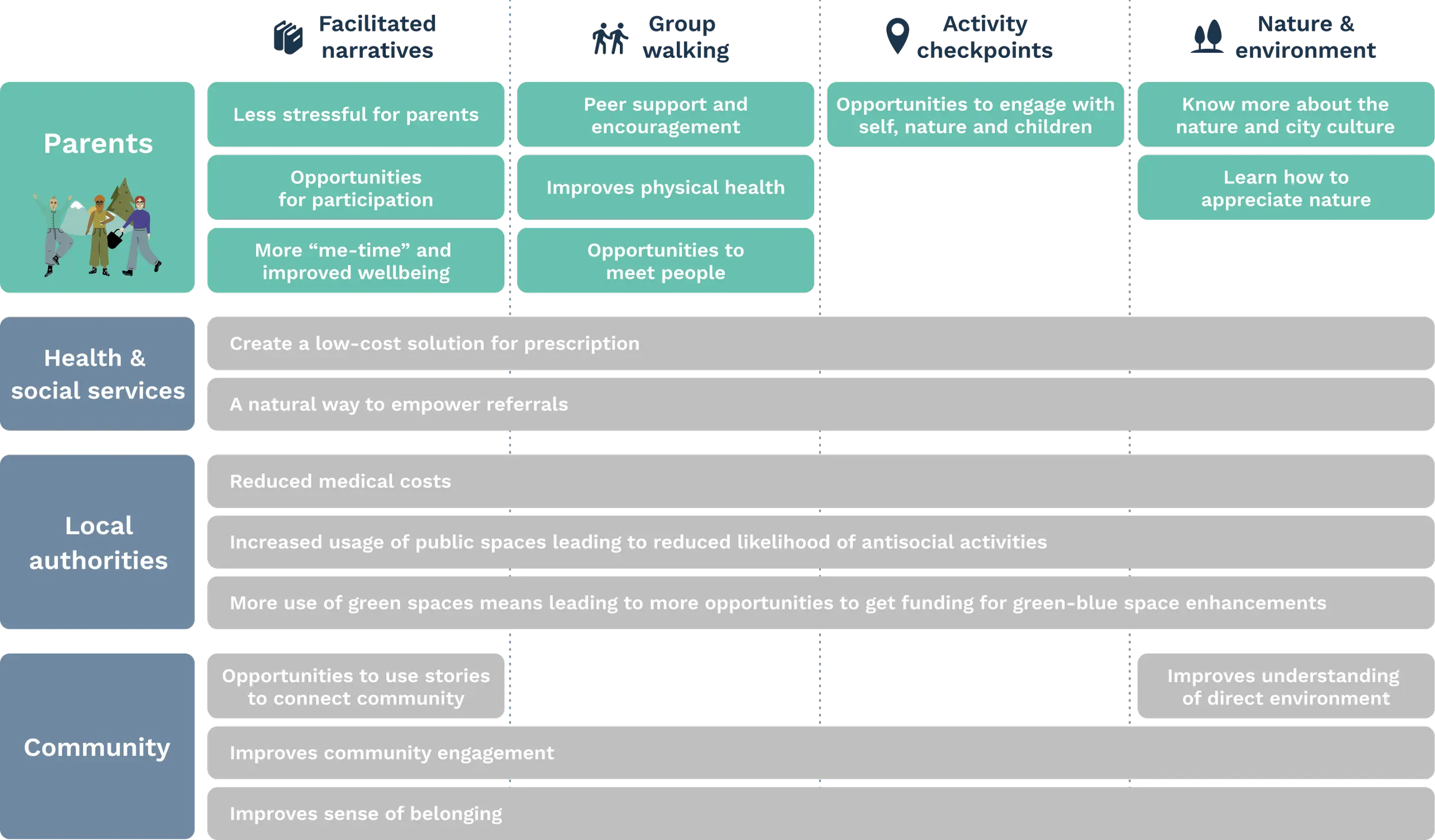
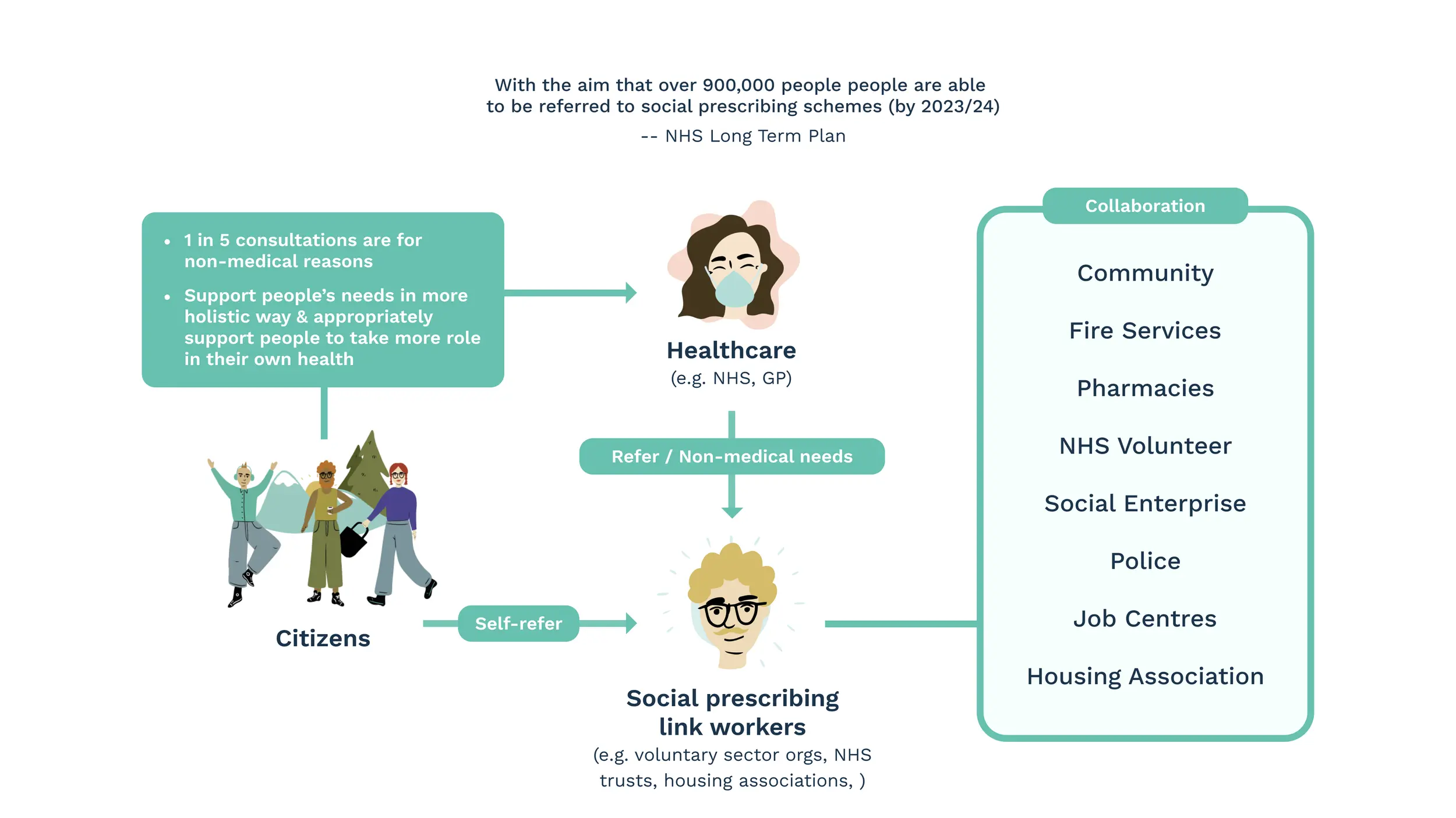
From the research on “Understanding pressures in general practice”, the NHS faces mounting pressure in balancing their resources and demands — whilst the workforce and funding is declining, there is an increase in healthcare demands and social needs. The NHS also forecasts that in five years over 2.5 million more people will benefit from ‘social prescribing’.
Green social prescribing links people to nature-based interventions and activities and includes both green and blue environments. Activities are varied and may include green exercise, such as local Walking for Health schemes and dementia walks, active travel (such as walking or cycling), local Park Runs, care farming, community gardening and food growing projects, as well as conservation volunteering, green gyms, and arts and cultural activities which take place outdoors.
Insights
Perinatal mental health problems
Perinatal mental health problems are those which occur during pregnancy or in the first year following the birth of a child, and affects 1 in 5 new and expectant mums. Even then, women in around half of the UK have no access to specialist perinatal mental health services.
The blank space in social prescribing
Most social prescribing focuses on addressing loneliness and anxiety, in mostly older tenants, but 32% of social housing households are families with children (21% are single parents, 11% are dual parents).
Nature can be an effective intervention tool
There are more and more studies that show how nature can be an effective intervention tool for the improvement of one’s wellbeing; and that it isn’t just about being in nature but also what one does in nature that contributes to the positive impact.
HMW
use nature as an effective public health intervention tool and as a key asset for mental health and wellbeing activities to increase mums-to-be’s mental resilience and preparedness for the challenges of motherhood?
Design Proposition
Brightside is a unique service designed to provide antenatal programmes centred around mental wellness for mothers-to-be using nature as an intervention.
Existing motherhood-related programmes revolve around physical health, their baby’s health, birth-giving and baby care techniques, even how they wish to maintain looking good, but little emphasis is placed on mental health.
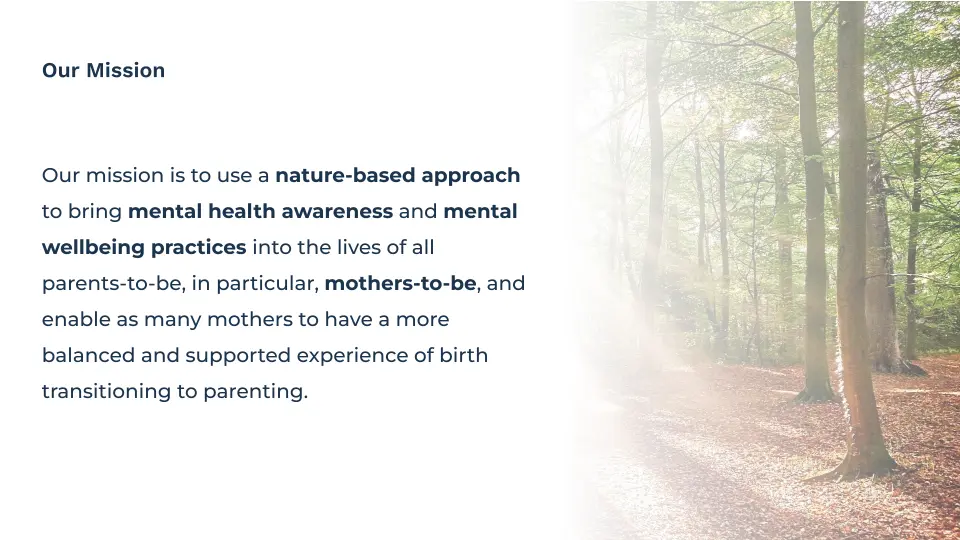
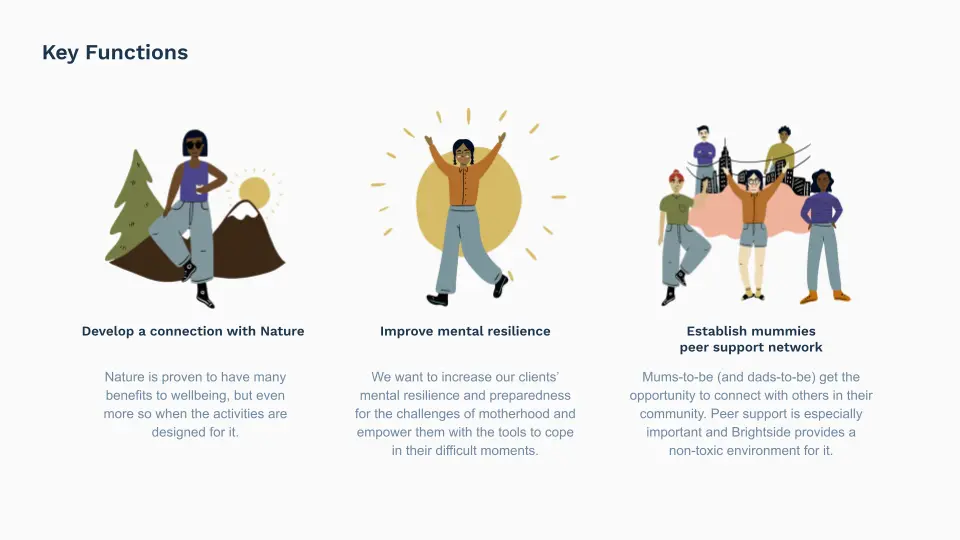
We aim to raise awareness on parental mental health and the importance of mental wellbeing in a mother-to-be's preparation towards motherhood, and promote contact with nature as an effective public health intervention tool and as a key asset for mental health and wellbeing activities.
Service Concept
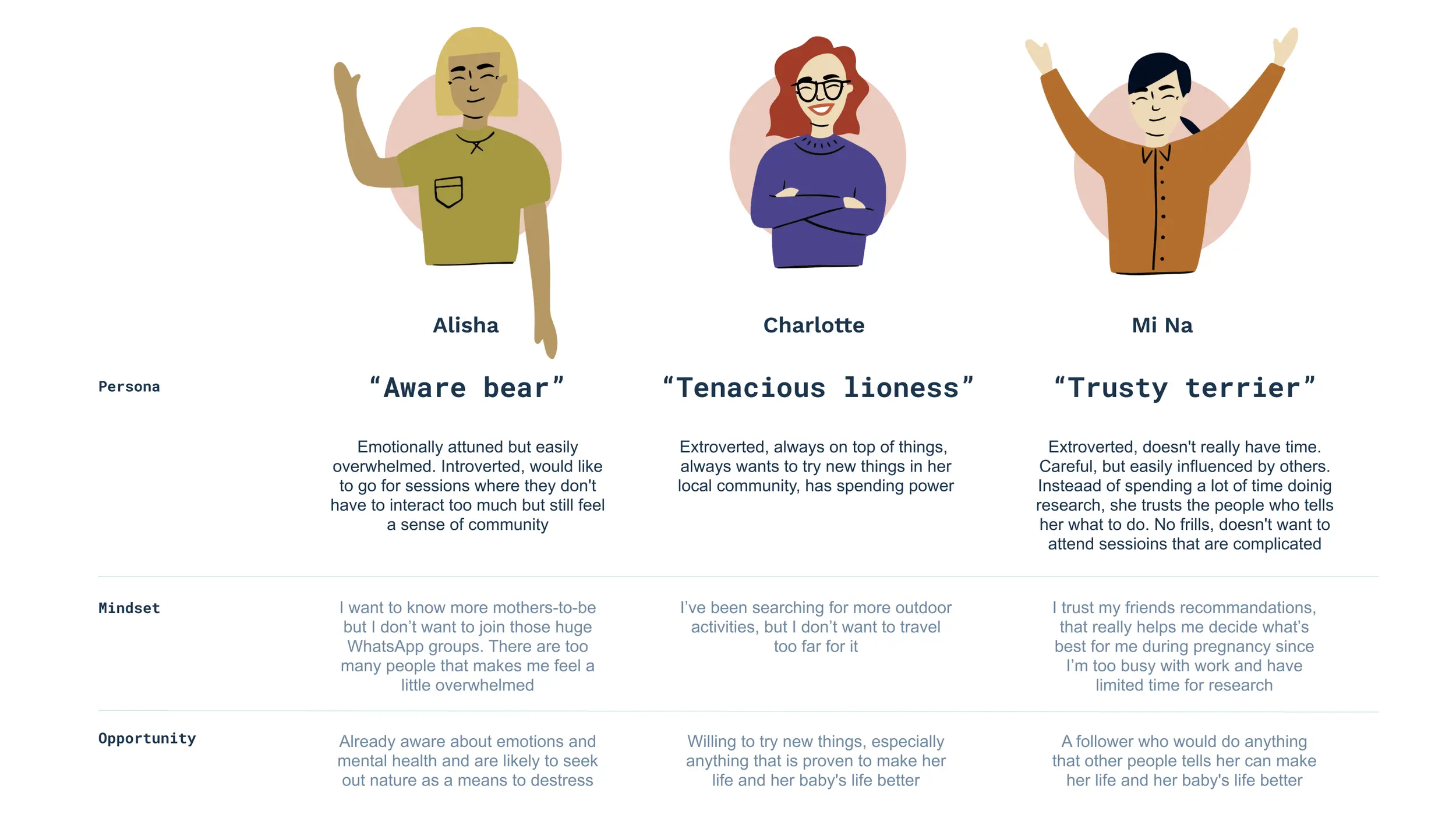
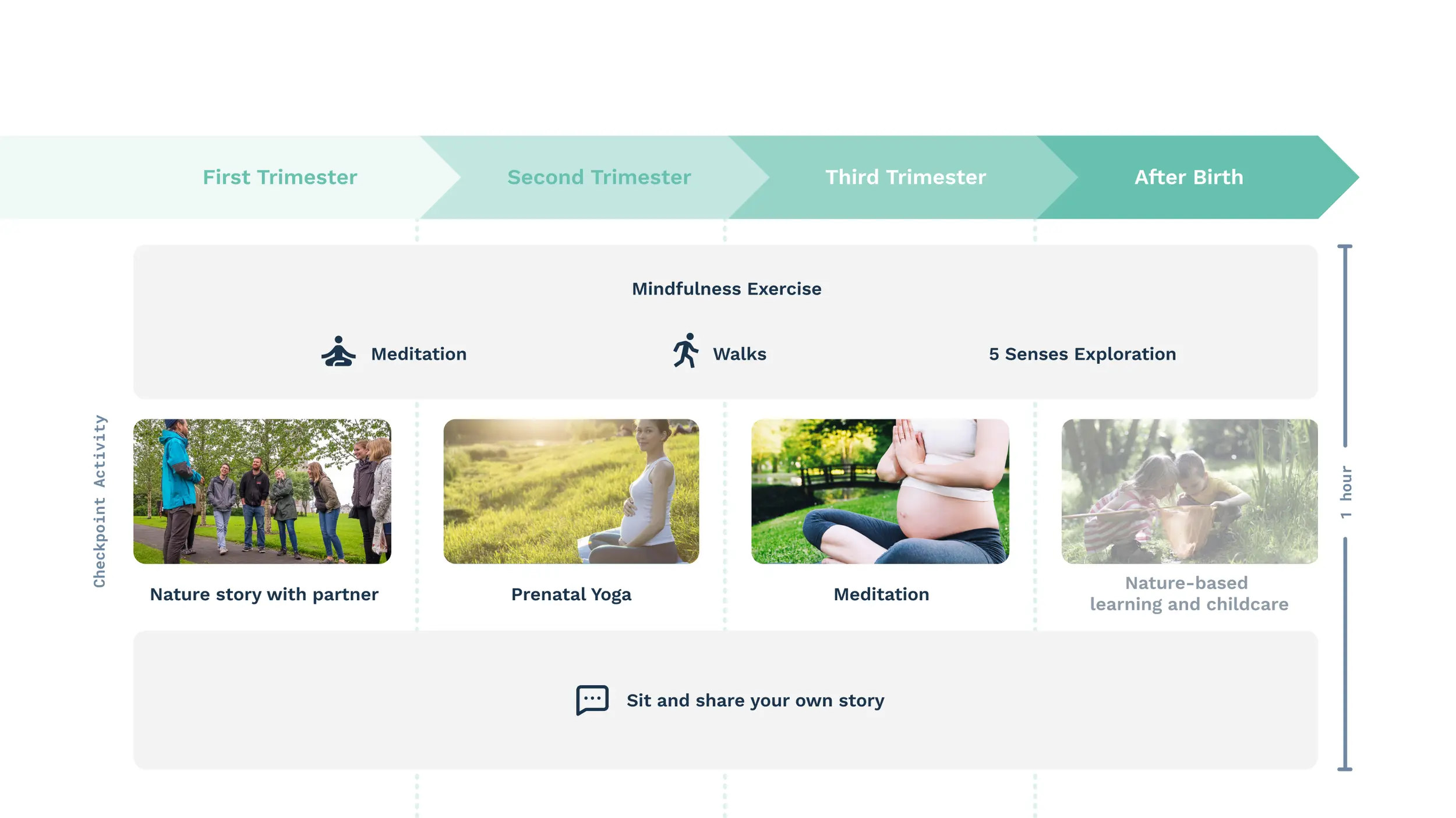
Presently set in London but scalable to different cities, our Brightside programme contains a series of guided group activities to be held at green spaces. Our programme is designed to follow mothers through their pregnancy journey, where each stage consists of a combination of different activities. Our research with pregnant women show that whilst they’d like to meet other fellow future moms outside, having their partners involved in the antenatal activities are important to them too. From nature reconnection activities with our clients and their partners, to prenatal yoga and meditation, mothers-to-be can subscribe to the programme from whichever stage of their pregnancy.
Service Journey
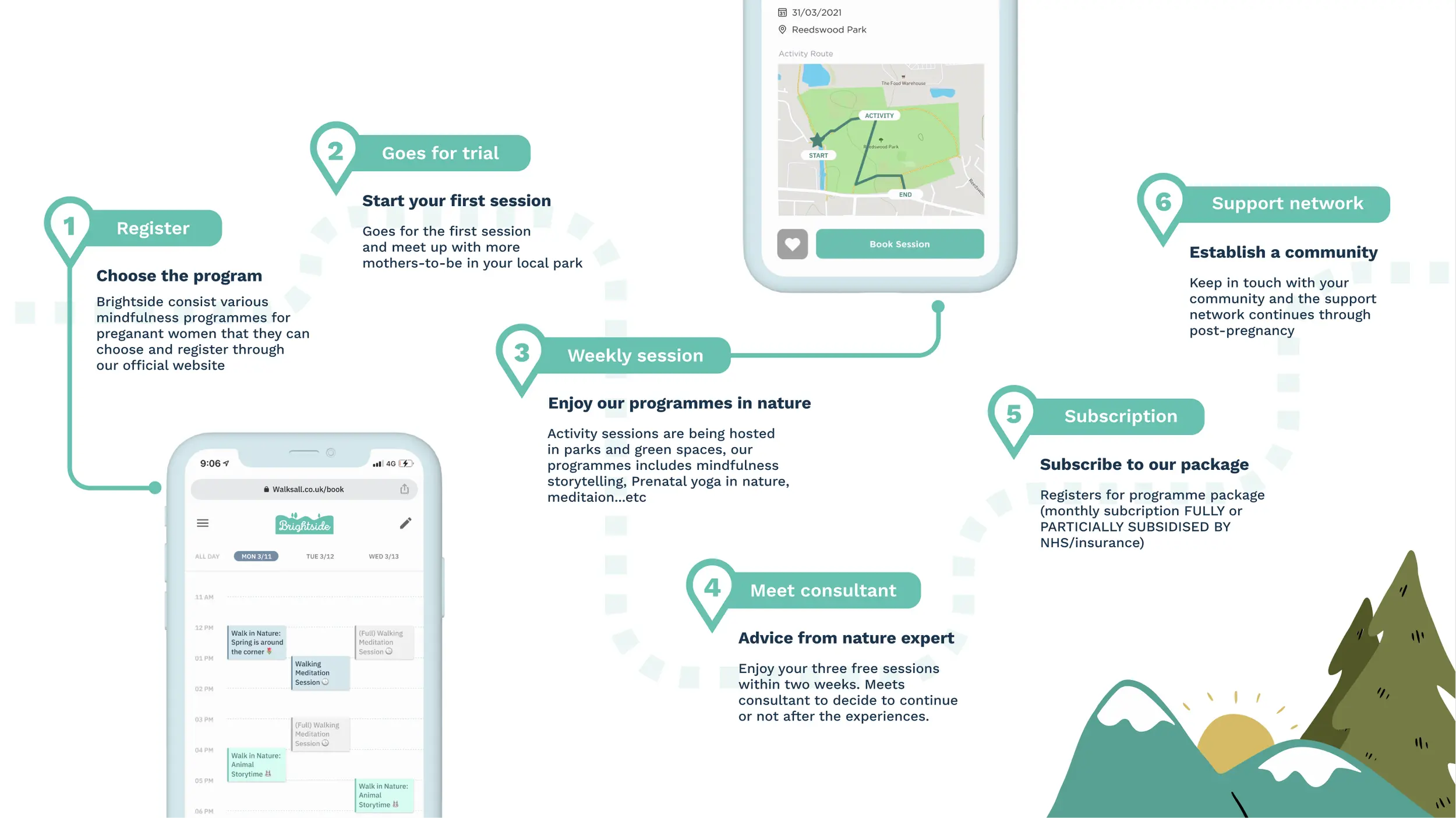
Firstly, an interested customer can sign up to our 3-trial session through our main website, and join our weekly programme at their preferred park selected. After the trial ends, our consultants will follow up with them to discuss if they would like to continue with a longer term programme. The journey ends when they graduate from our programme and establish a strong support network for mothers living in the same neighbourhoods, becoming our advocate.
Market analysis
The report “The costs of perinatal mental health problems” from Centre for mental health highlights that “up to 20% of women develop a mental health problem during pregnancy or within a year of giving birth”. Even then, these are numbers from reported cases, and we don’t know how many remain undiagnosed and unreported due to the stigma around mental health and mothers.
The promotion of our project is bound to improve the mental health of pregnant women. This also promotes social care and attention for pregnant women. Our project will develop both online and place-based services (more focused on physical service), aiming to focus on customer habits, try not to lose key customers and meet their needs.
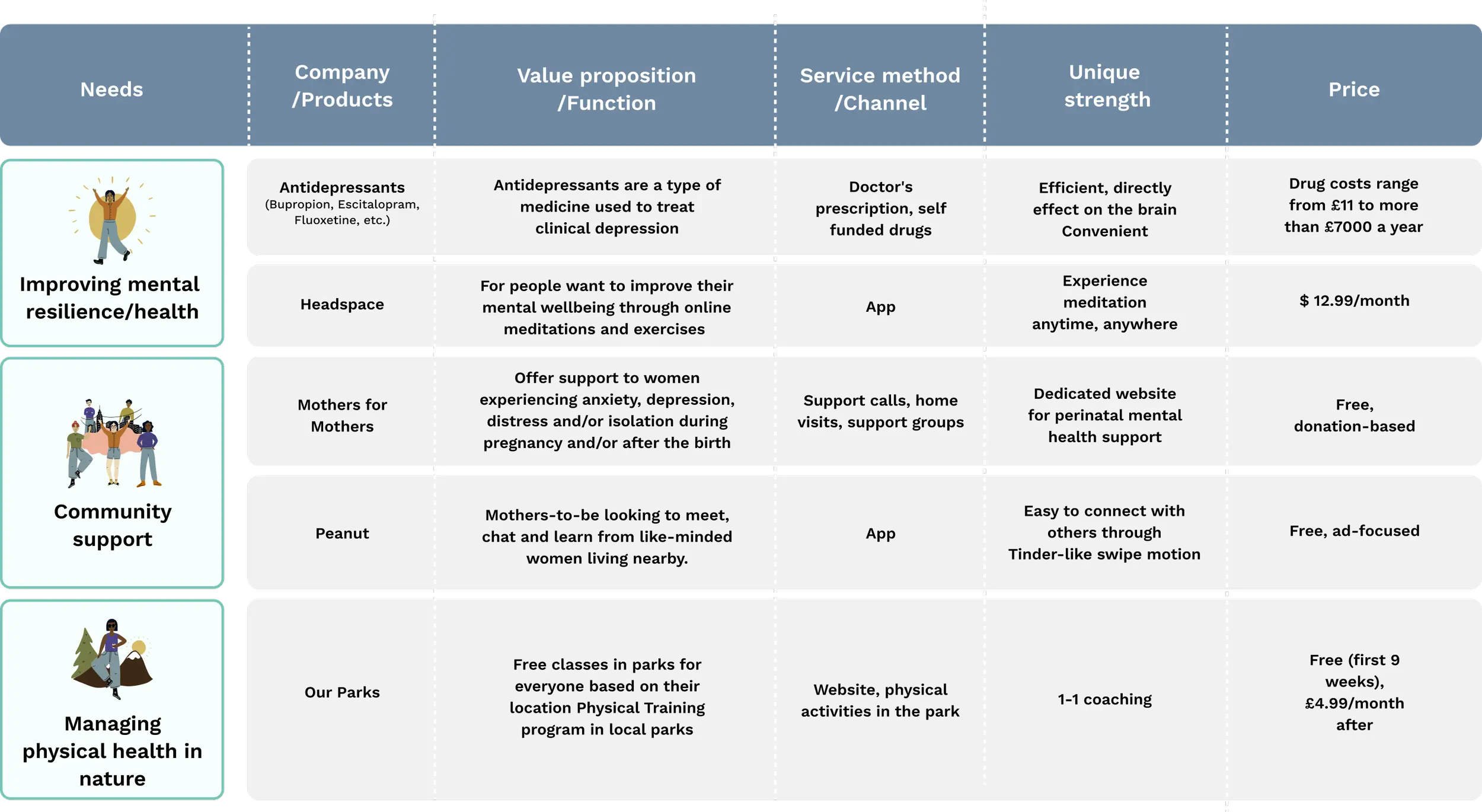
Market Strategy
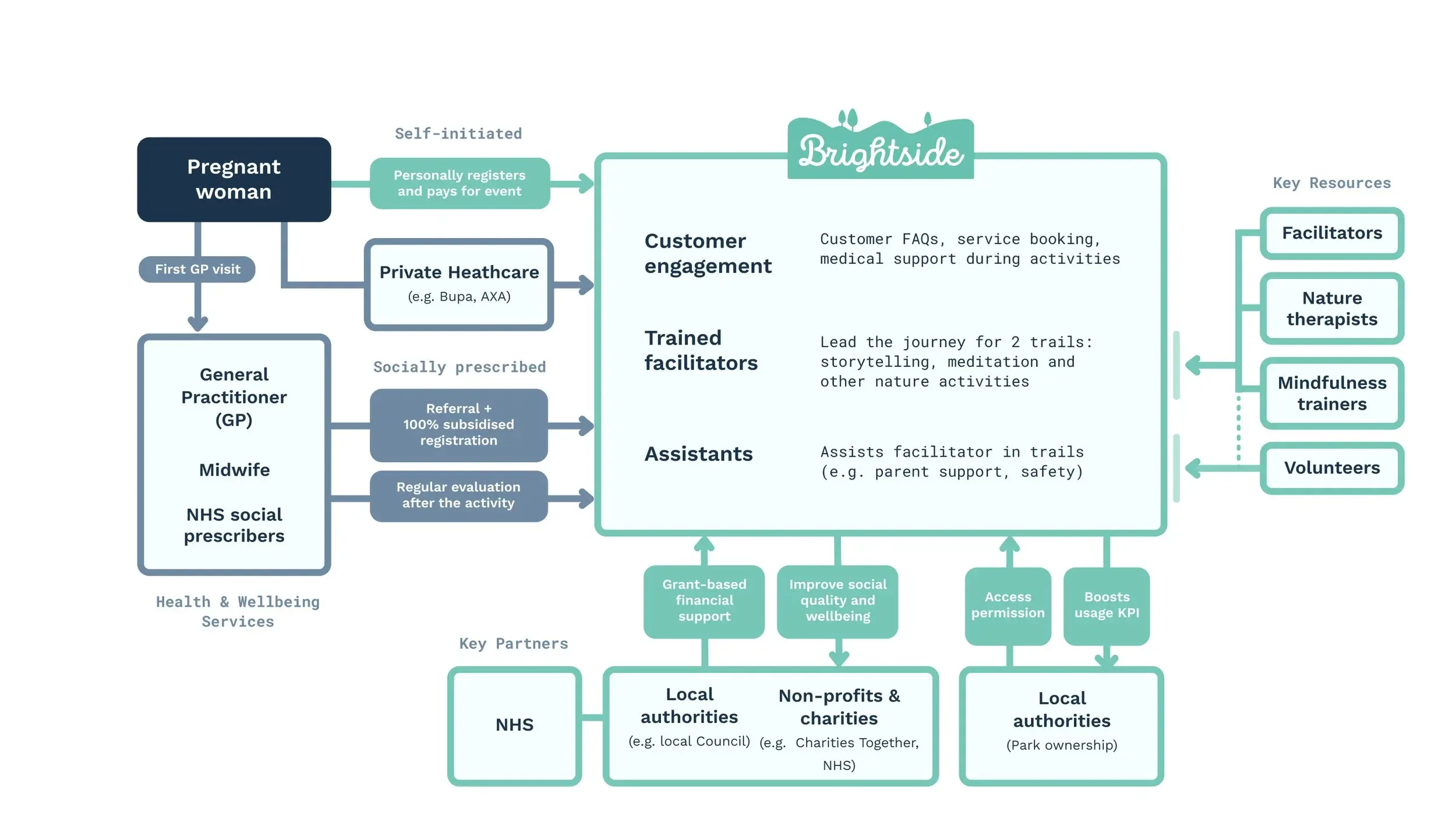
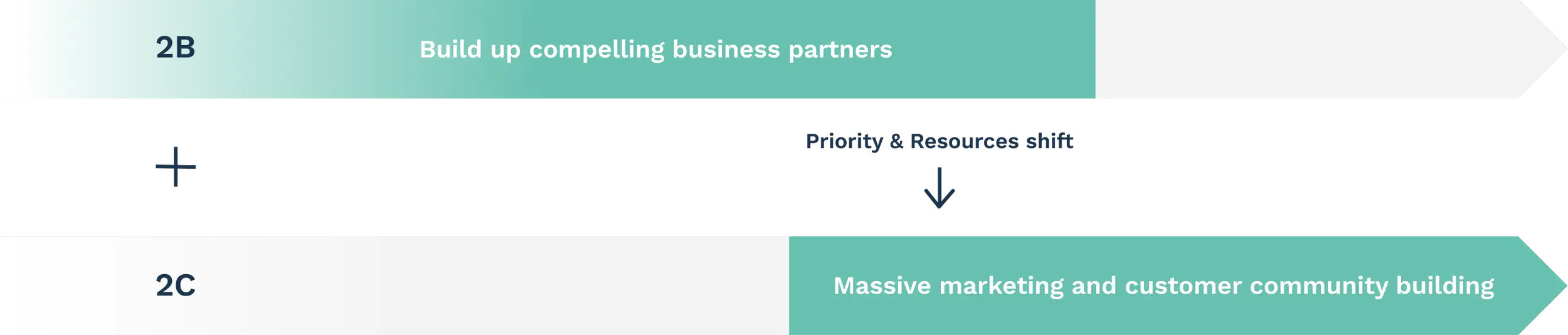
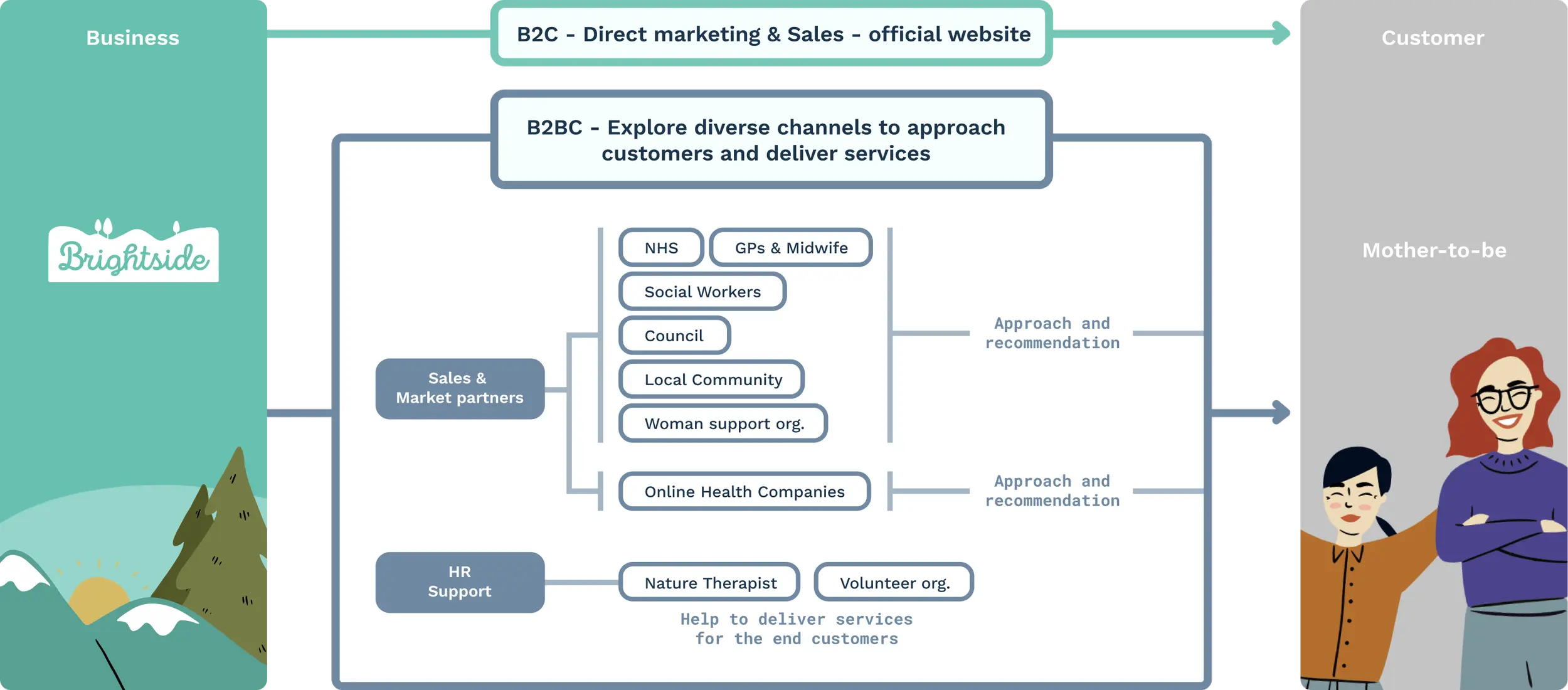
Given the characteristics of our business, we designed the B2B2C business model to approach the market, thus leveraging the balance between partner and end customer in different stages is important for us. We defined four marketing strategies to develop our business:
- Shift resources based on greatest needs
- Define stakeholder engagement approach to serve distinct personas
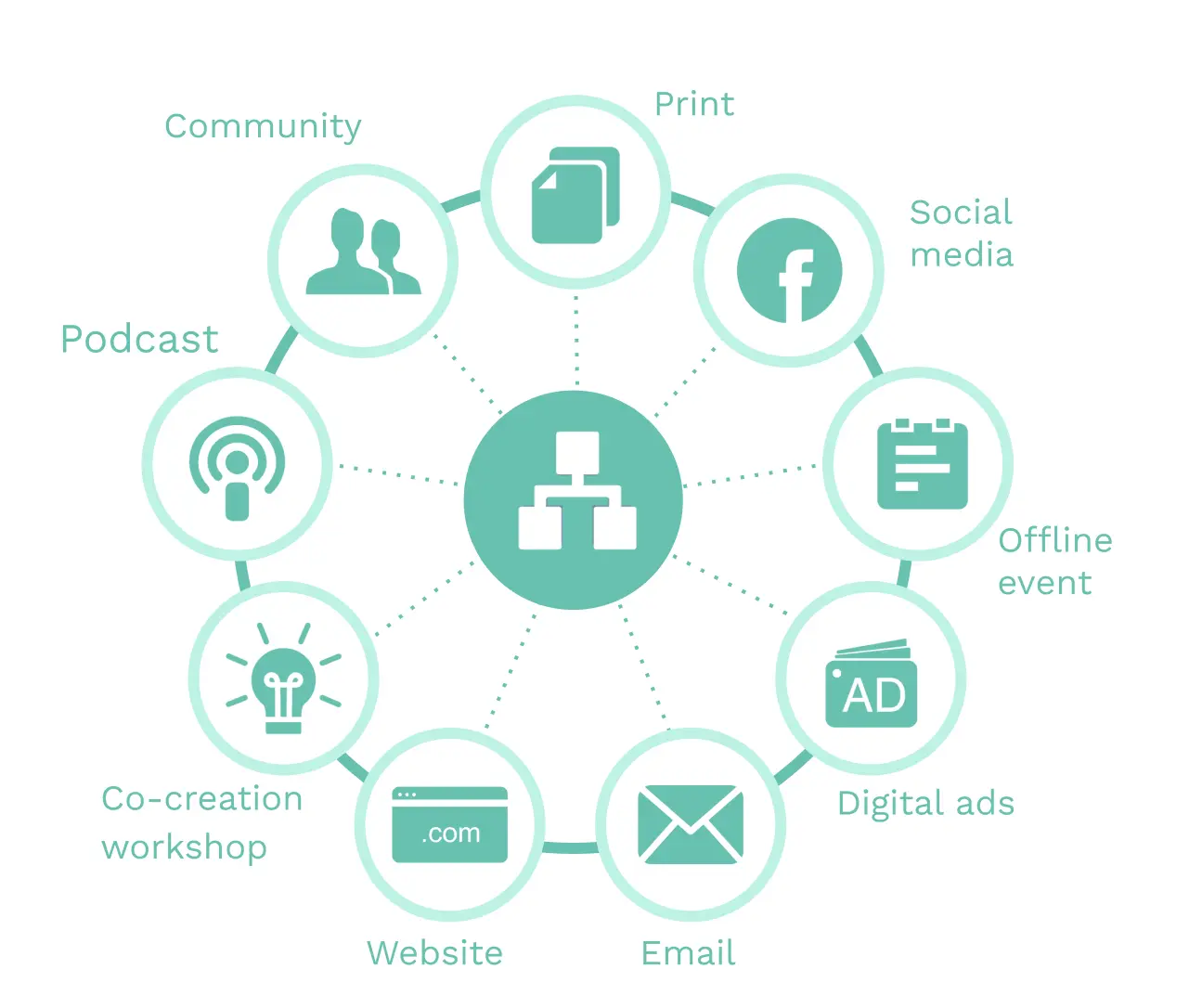
- Provide Consistent Omni Channel Brand Experience
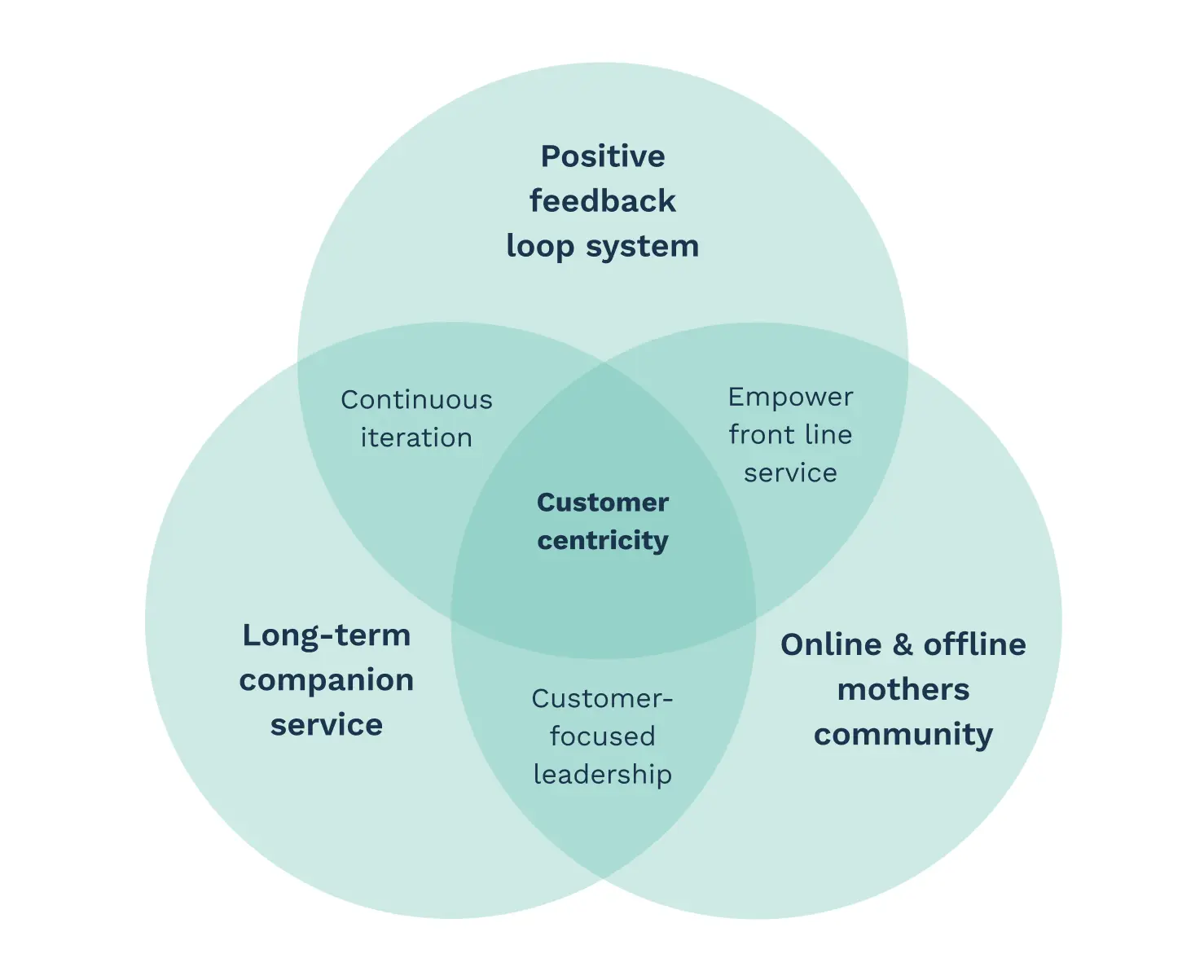
- Engagement model to maintain customer
Business Model
We aim to position ourselves as a non-profit social enterprise having the mix model—B2B2C and B2C model, competing with other wellness-related programme.
Impact
Brightside will create impact in the community in the following ways. Mothers-to-be can improve their mental and physical wellbeing and reduce feelings of isolation through a peer support system. This will help to decrease government medical costs, build community connections and positively influence the next generation’s relationship with nature and wellbeing.