
The NextAct is a participant-led network which empowers people 65+ to engage in interest-based communities in a way which they want and foster continuous engagement between members, finally enabling healthy ageing.
NextAct: Age-inclusive service design for local community
The challenge
The self-led project was part of the program initiated by UKRI, Helen Hamlyn Centre for Design and Cartwright Pickard Architects Ltd. The project aim is to explore pioneering architecture for the later life sector in UK from both architecture and service design perspectives.
My role
Solo project: design research, concept design and development, client management, exhibition design
My Reflection
The biggest challenge is building empathy, especially as it takes a long time to develop trust to hear true feelings and experiences. My biggest learning is - be honest and real, be not just a designer but a person. Choose the best way to do research, which is not always an interview. Over 65s, for instance, engage more in random casual conversations than a formal interview. Keep reflecting on your own perception. Is it ageism? Do you treat them equally? Your view of them influences your project outcome. Finally, to improve the project, I would develop a good visual to summarise it which would allow me to show the project to people easier to collect feedback.
Project quick view
Problem Statement
Most community services currently assume what over 65s want and treat them all the same way, neglecting their differing personalities, and desire for independence, engagement and fun. Over 65s cannot find the proper support to engage in local communities in a way which they like. This leads to bad mental health, low quality of life, social exclusion and unhealthy ageing.
HMW
How might we empower people aged 65+, who are active and self-motivated, to participate and develop the community which fosters continuous engagement with others, consequently enabling healthy ageing?
Service value proposition
Our participant-led and age-inclusive network empowers active and motivated people who are over the age of 65 to engage with interest-based communities in the way they want, helping them make continuous connections and enrich their future life.
Design Story
Research
Social Exclusion in the ageing society
In UK, nearly a quarter of the population will be over 65 by 2040 and 1/3 of them will live alone. The public life and community engagement is vital for their mental health. However, the COVID-19 has brought big challenges or lock down shut off the access to their usual forms social contact. Although the lock down ends now, the limited information channel and online services trend stop them re-engaging in communities. Under the post-normal life trend, it is a good time to engage with all age group to shape a more inclusive neighbourhood.
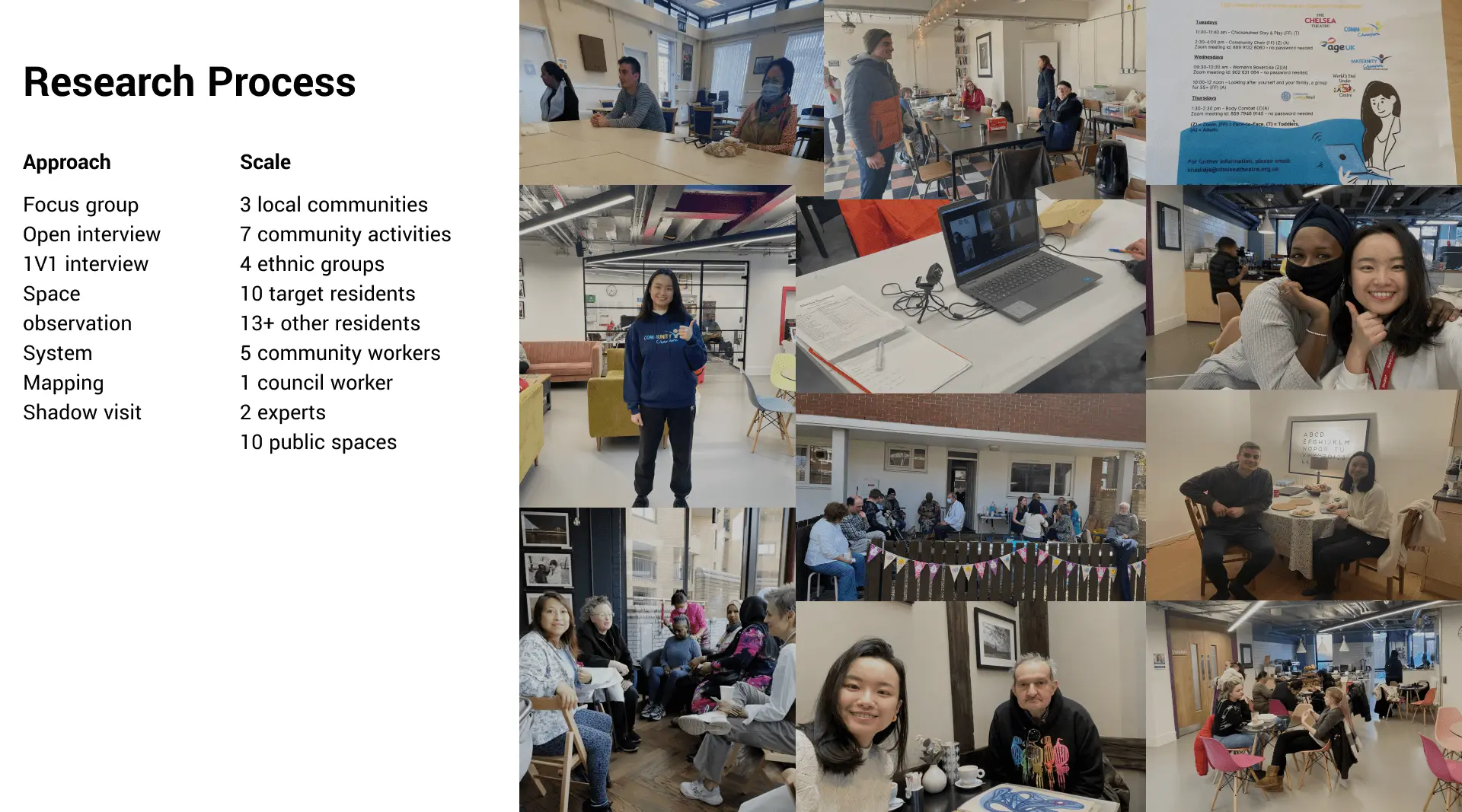
4-week community exploration as a volunteer
I did 4-week volunteer works in local communities, exploring community life of over 65s from space setting, service delivery to individual experience.
Insights
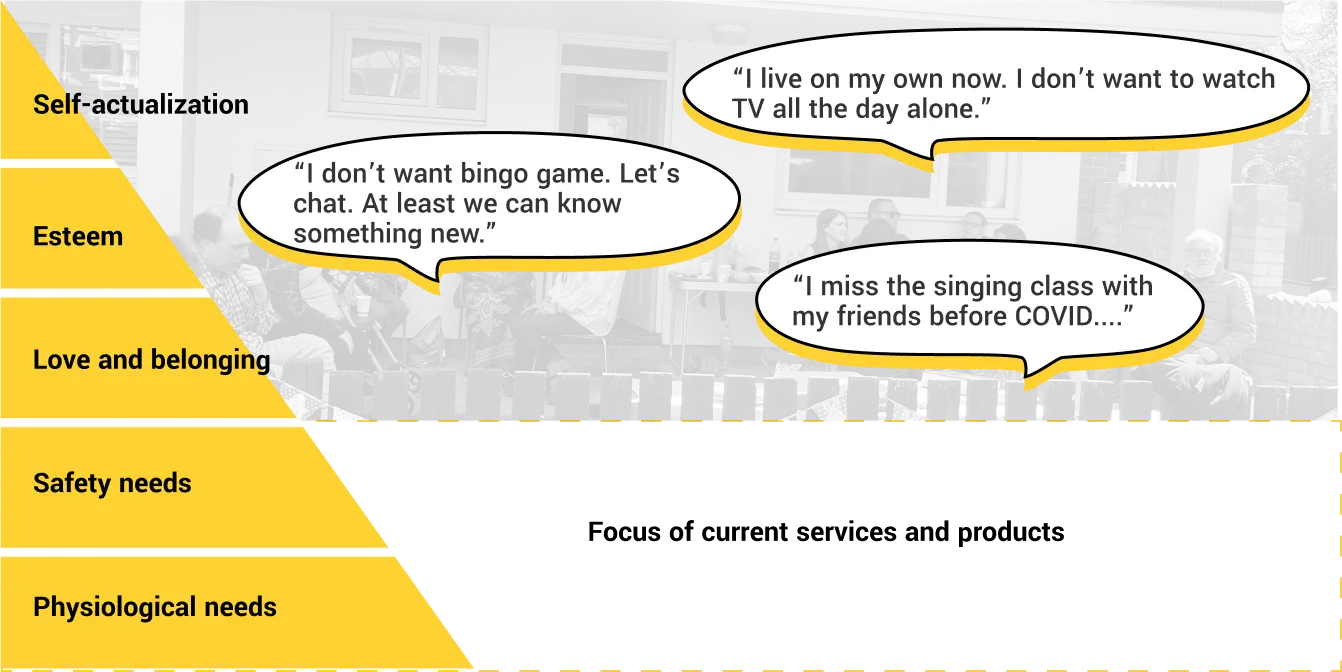
Public life overview: The unfulfilled demand
Most current services focus on the bottom sections of Maslow's hierarchy of needs. But higher level demands, such as as a desire for love and belonging, are what the over 65s really want.
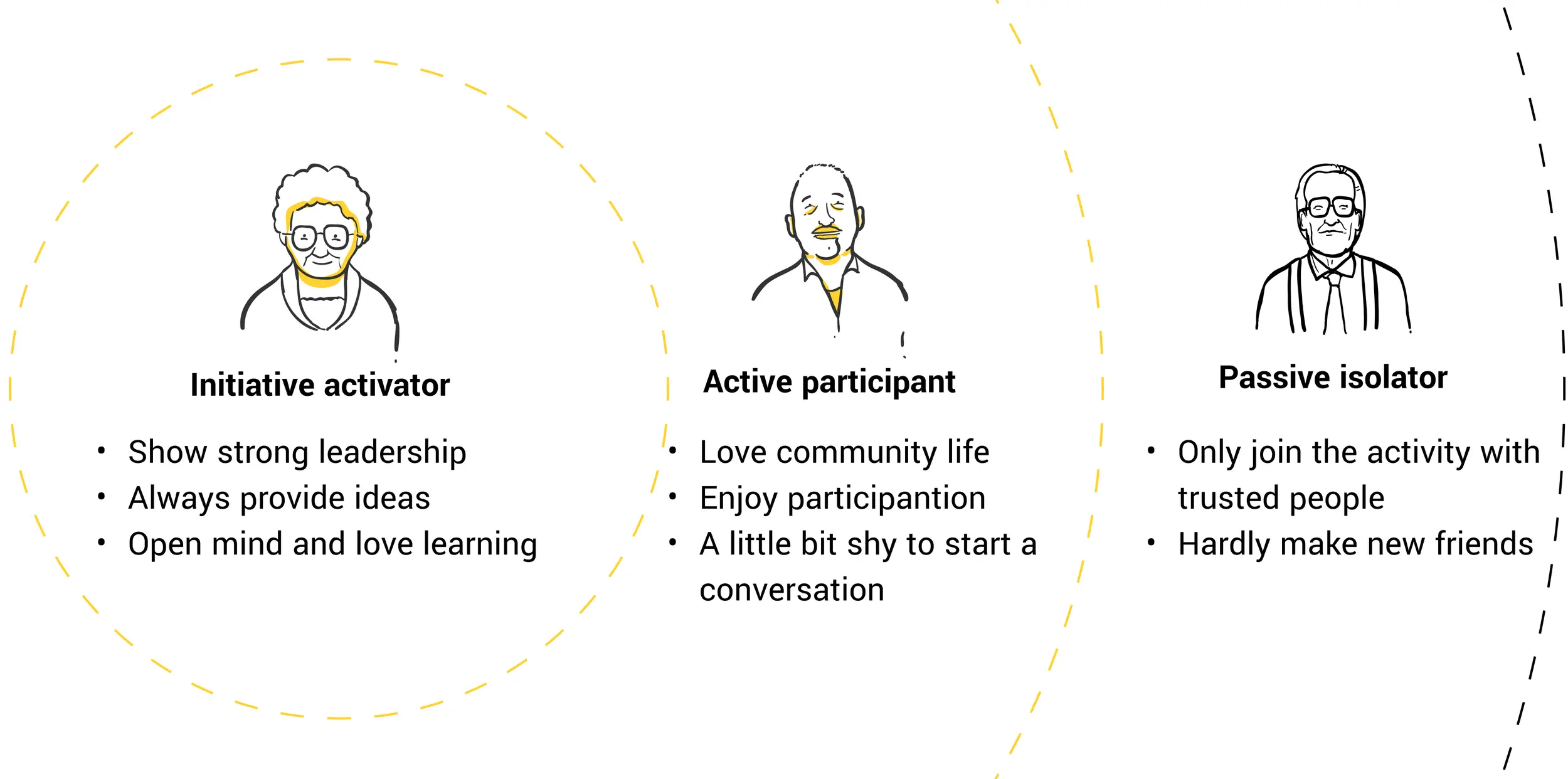
Social engagement: Different community roles
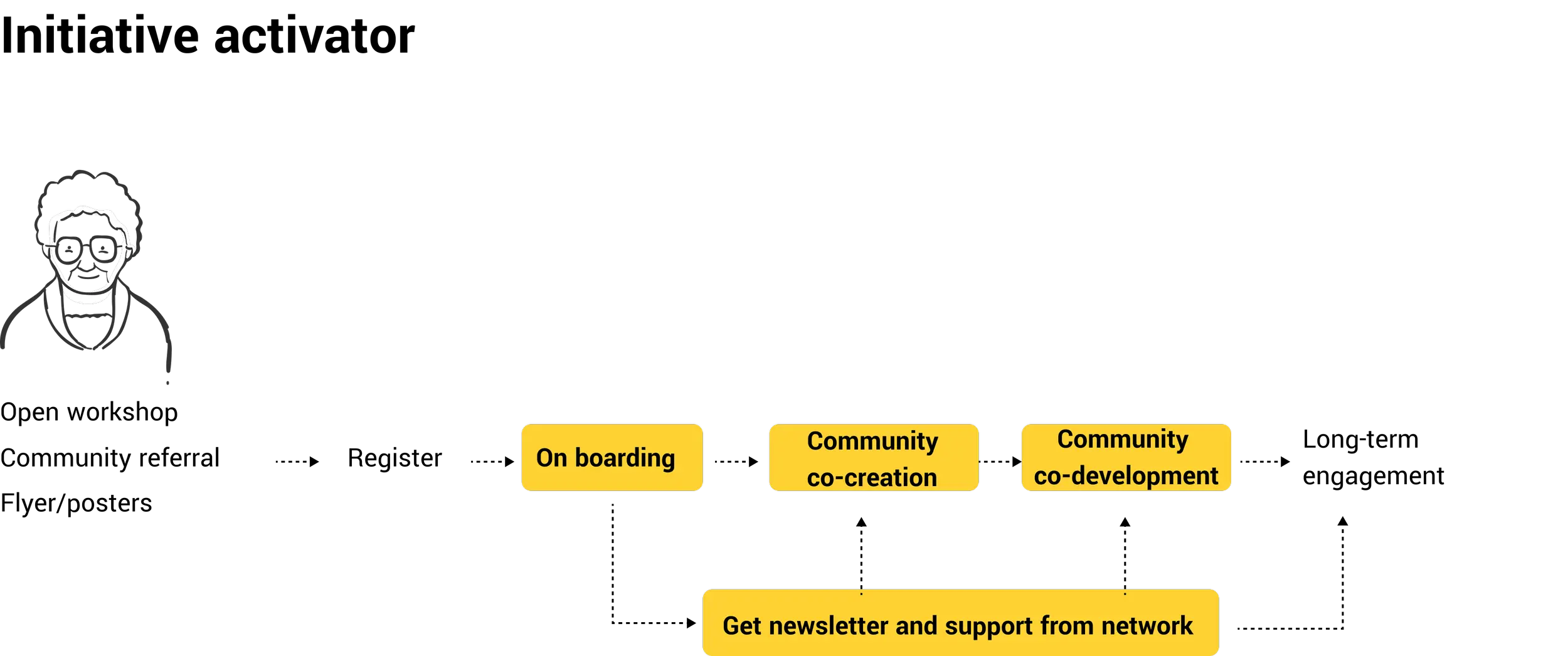
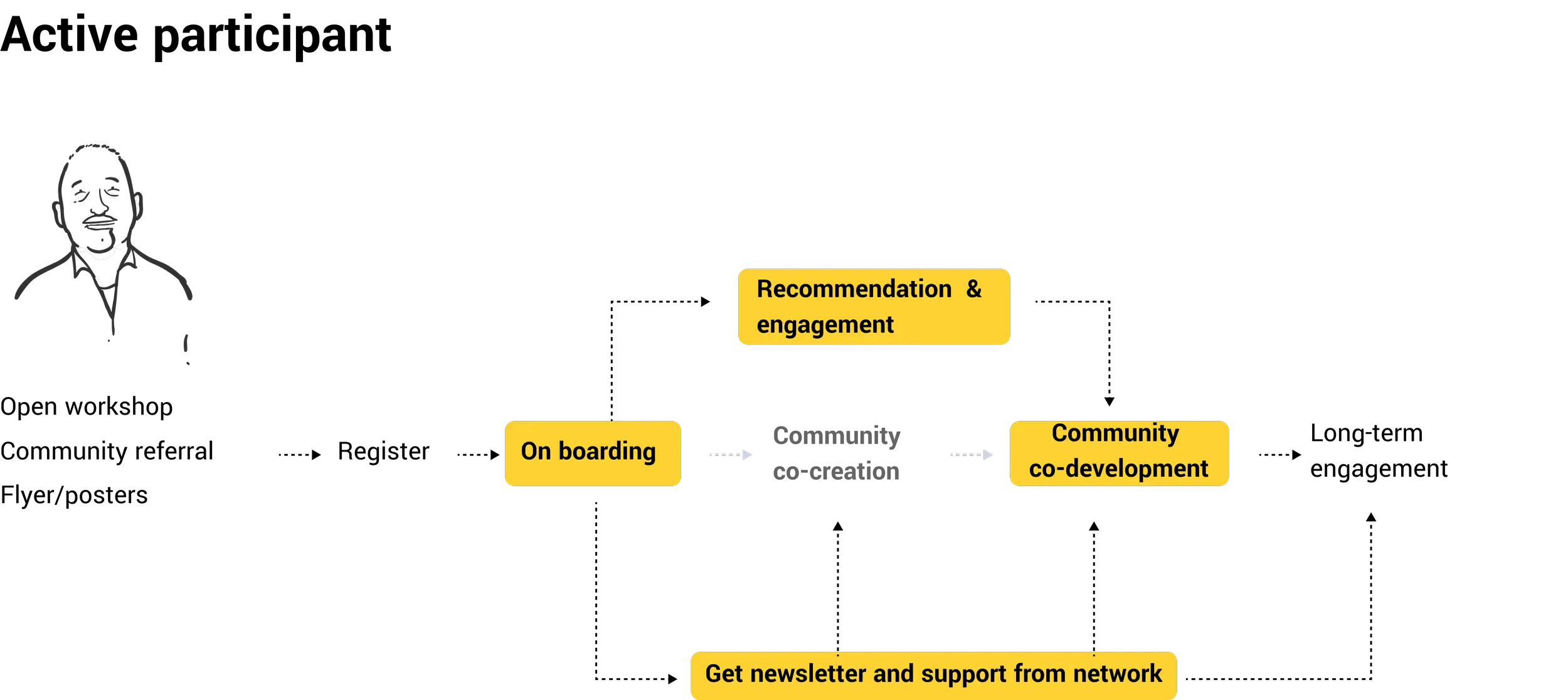
In terms of community engagement, over 65s show different willingness and demands. This project will focus on initiative activator and Active participant.
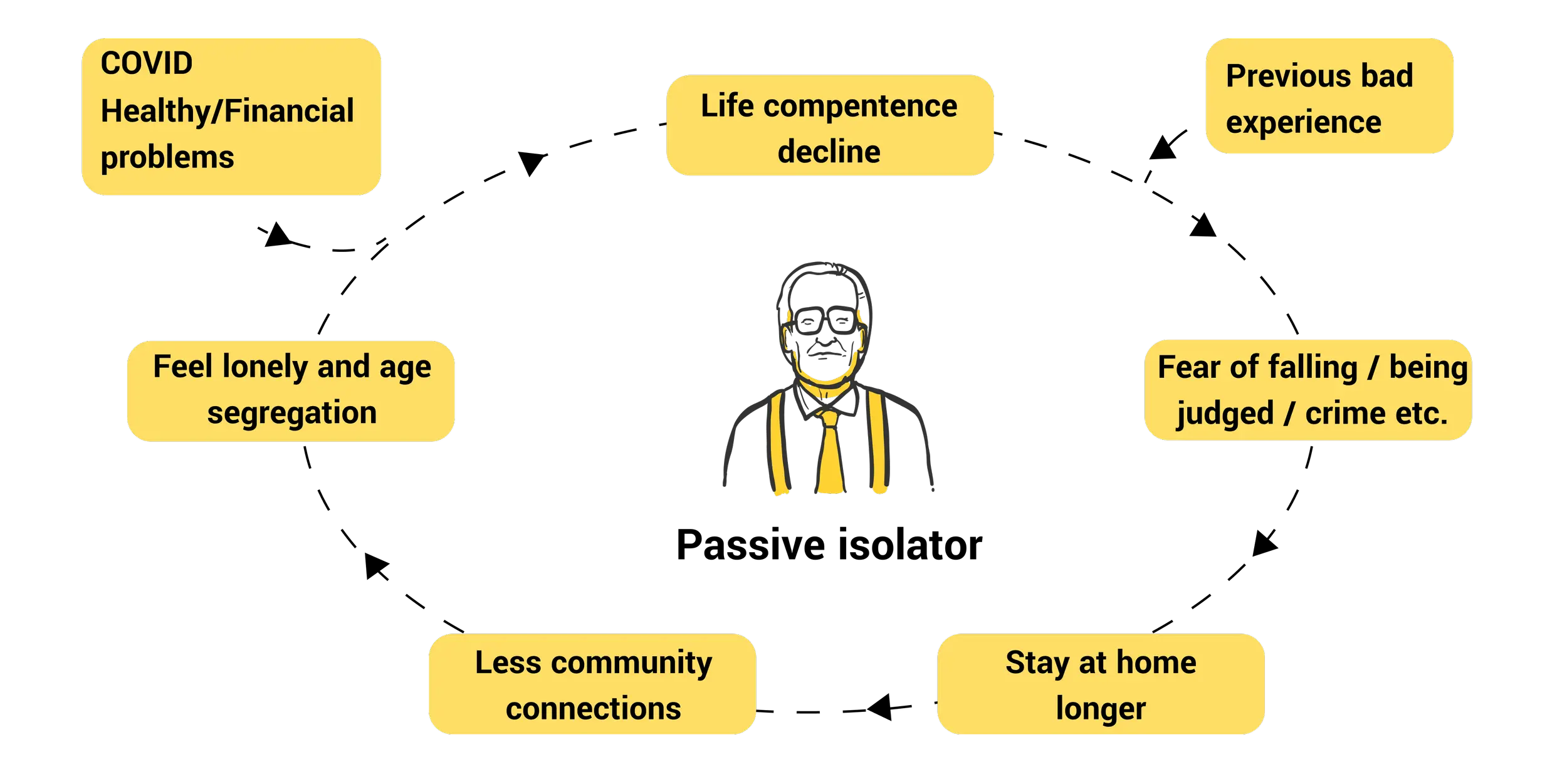
Individual wellbeings: The vicious circle
For all older community members, if they can not get proper support to engage with community in the long term, they are in risk falling into the vicious circle.
Insights summary
- The majority activities treat every older adult in a same way, neglecting the individual differences
- Some services are communicated in the wrong channel and tune, which bring more ageism and segregation
- There is lacking of opportunity and support for over 65 to show their potential and join the community co-creation
Design Principle
- Predictable environment and Information
- Long-term and Consistent connection
- Don’t put them into a box
- Offline-based information channels
HMW
empower people aged 65+, who are active and self-motivated, to participate and develop the community which fosters continuous engagement with others, consequently enabling healthy ageing?
Design Solution
Our participant-led and age-inclusive network empowers active and motivated people who are over the age of 65 to engage with interest-based communities in the way they want, helping them make continuous connections and enrich their future life.
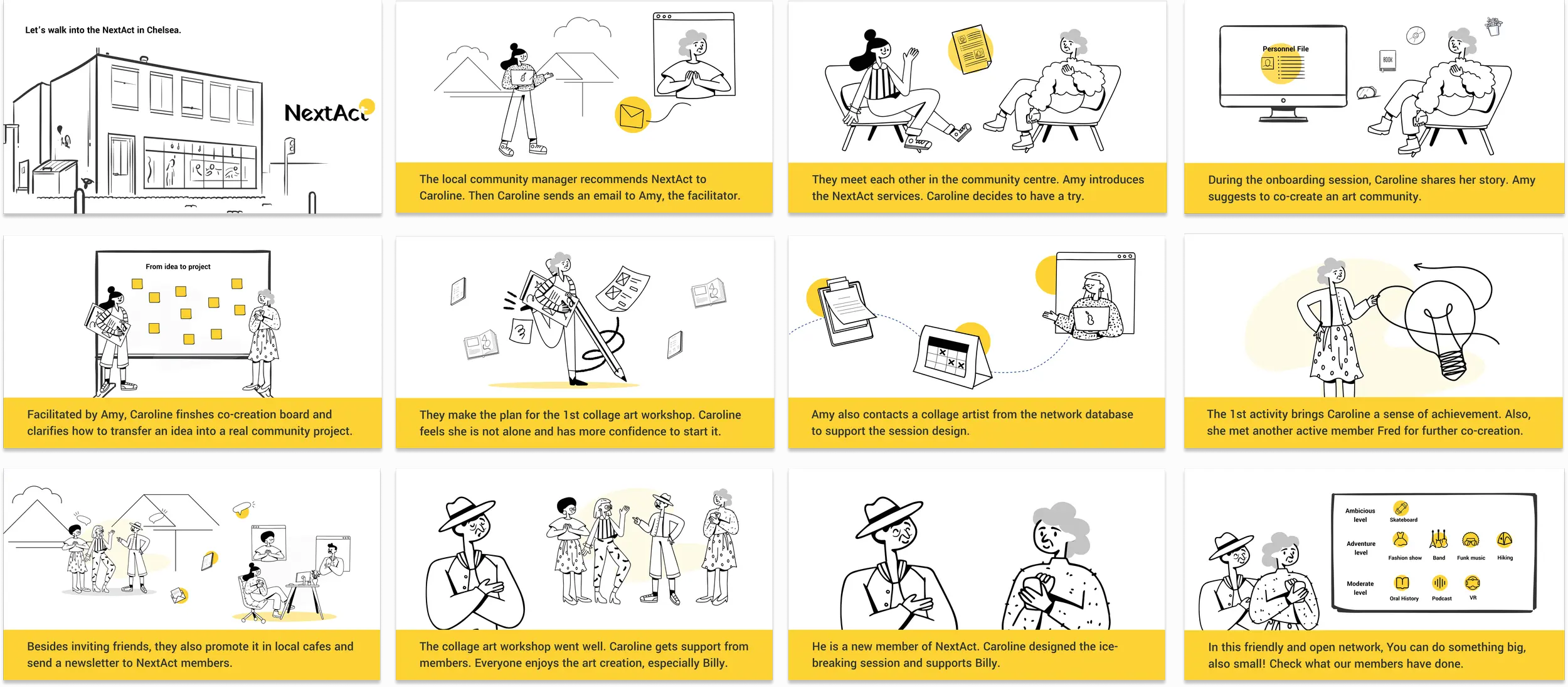
Different service journey
For different members, we provide different program and enable them to engage within the community in the way they want.
Touch point
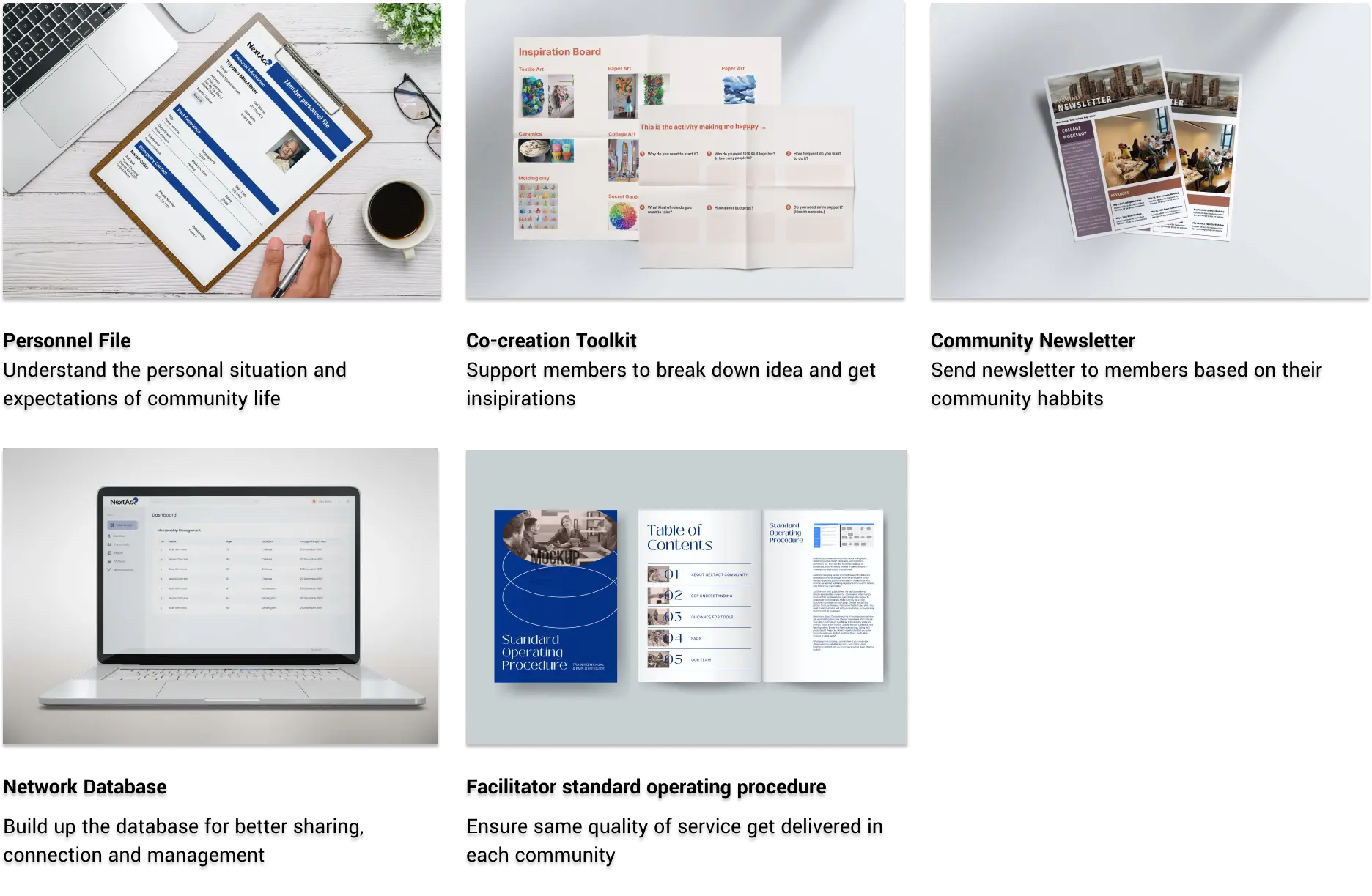
Considering the characters and life style of the target group, I designed the low-tech services mainly based on the offline channels.
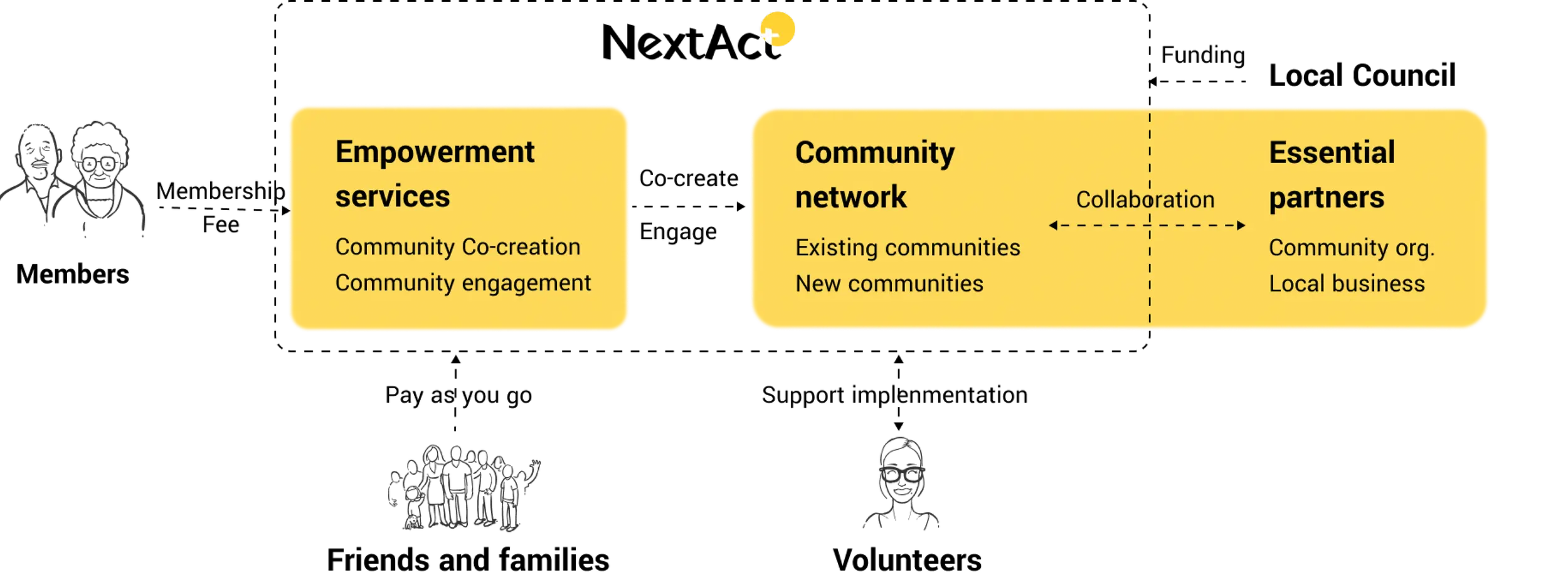
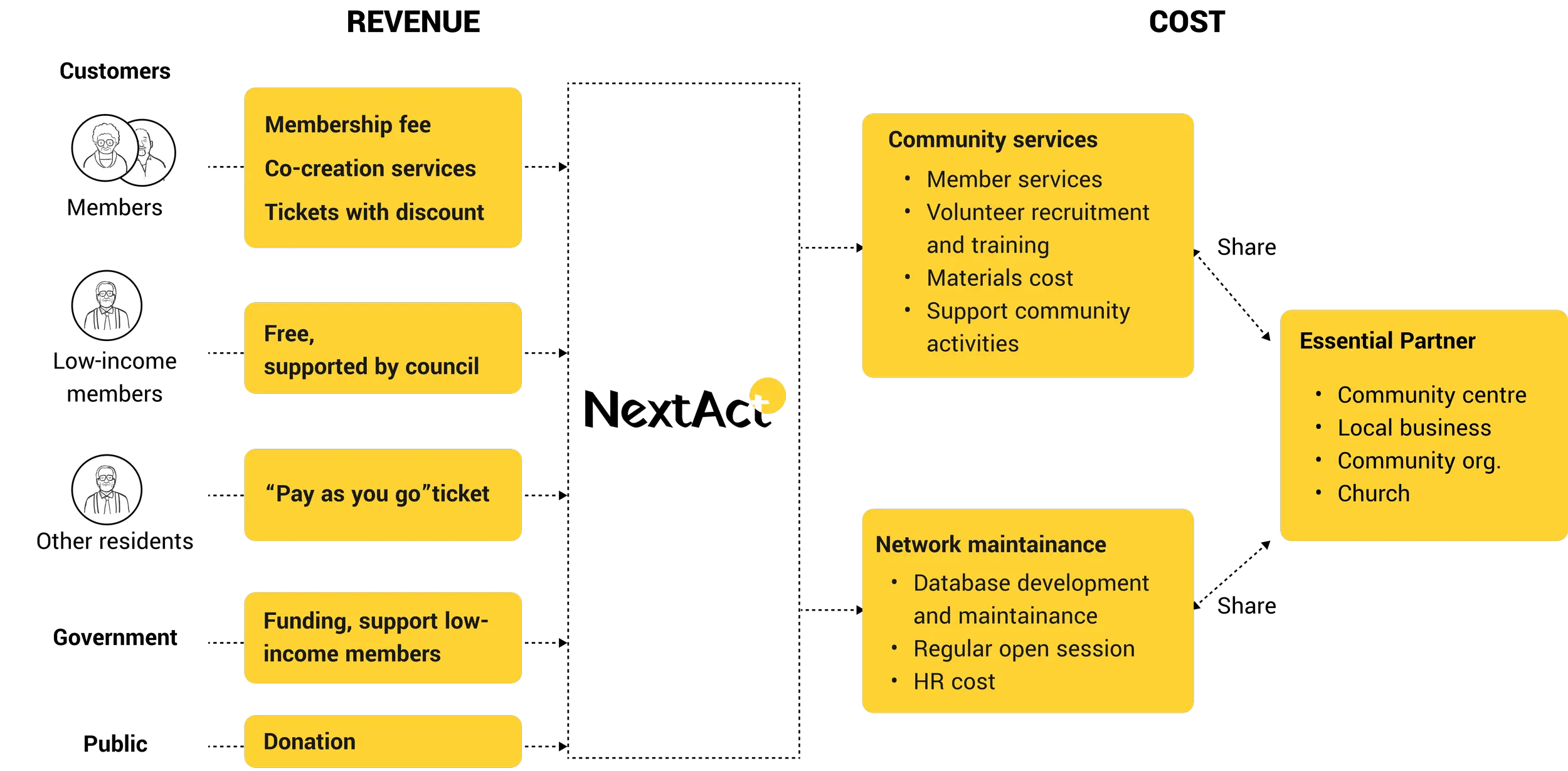
Business model and cash flow
As a non-profit organisation, NextAct will charge the membership fee and workshop tickets to ensure the daily operation. The main cost, HR cost, will be shared with essential partners and get covered from volunteer programs.
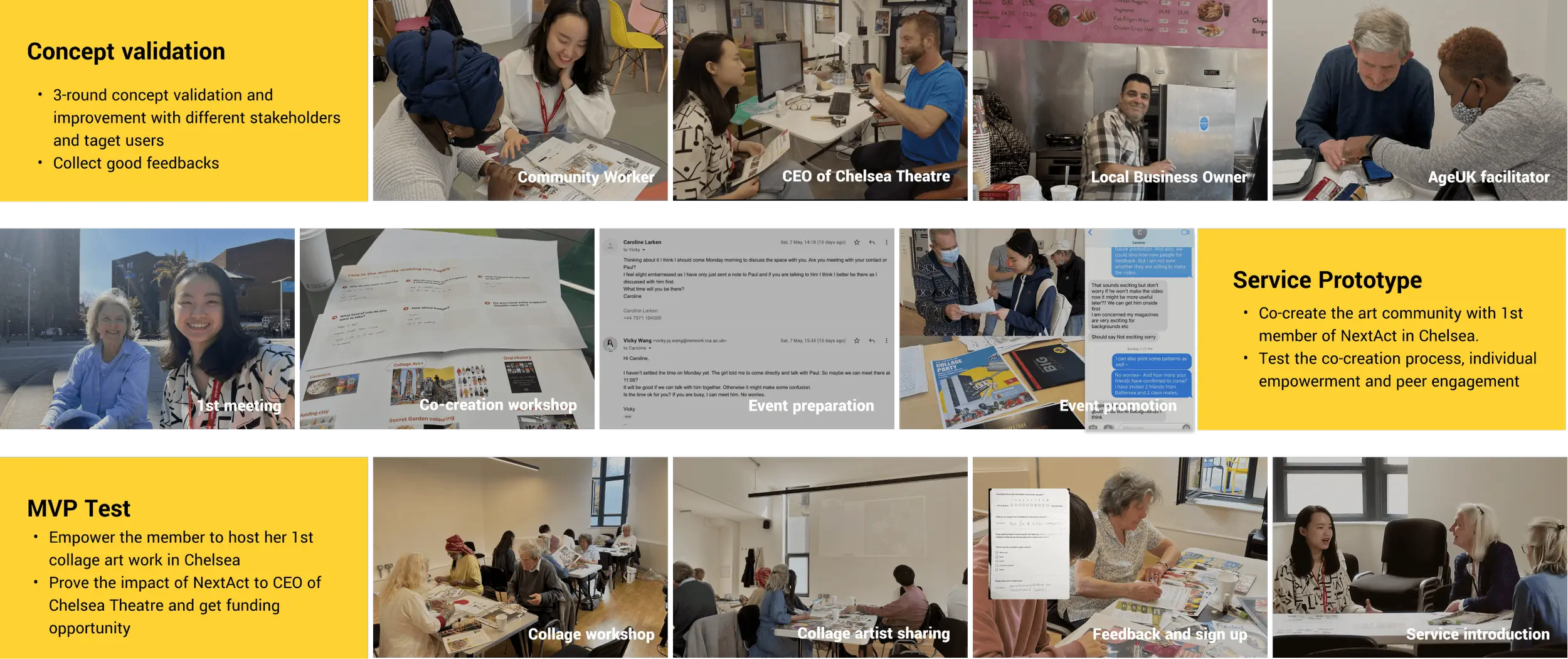
Implementation and impact
To test the service concept and flow, I worked with one of the members in NextAct for her art community and co-created the 1st art workshop.
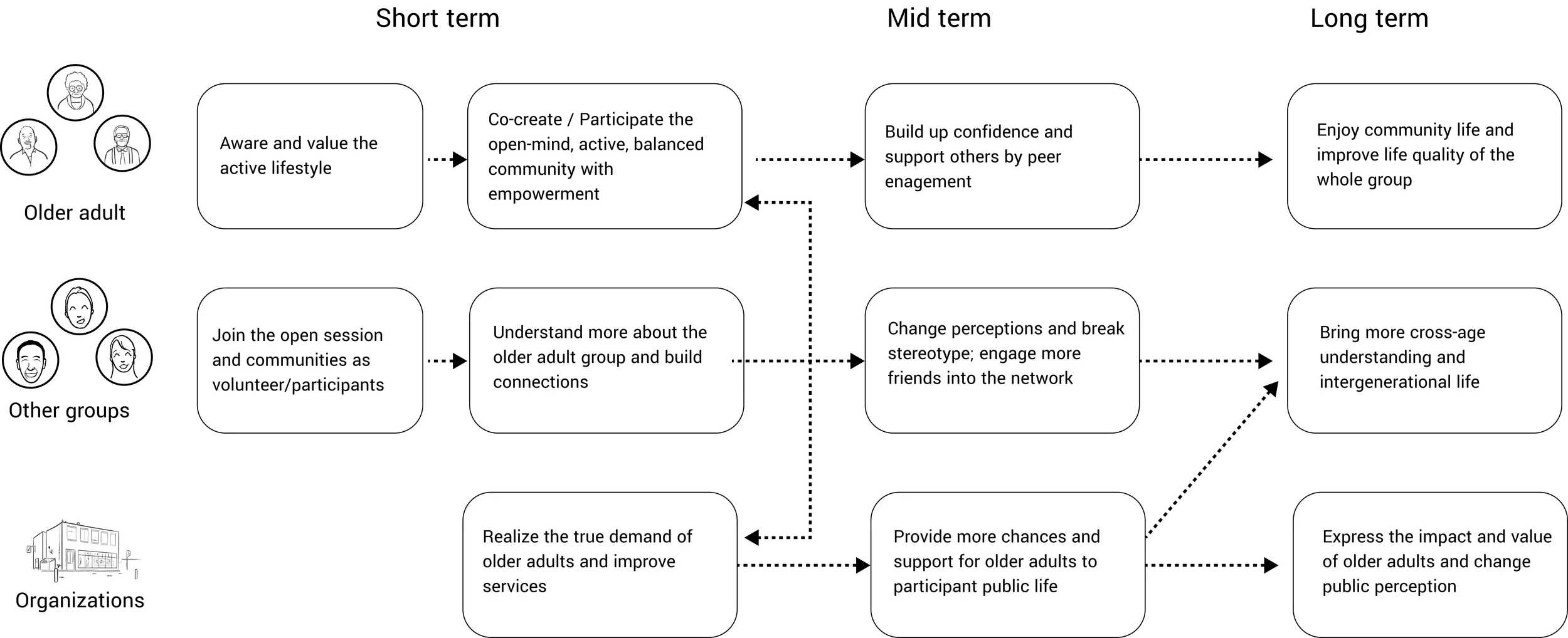
Theory of change
NextAct provides personalised service and continuous network to empower adults over 65 to co-create, develop and engage their own communities. This helps them to build social confidence, speak out about demands, support each other through peer engagement, and embrace active ageing together. As volunteers of this network, other age groups could get involved as an intergenerational community and change perceptions of older adults. For organisations and local councils, as an essential partners of the network, they could understand the true demands of older adults. They can then provide more suitable services, spread network impact and break public stereotypes gradually.